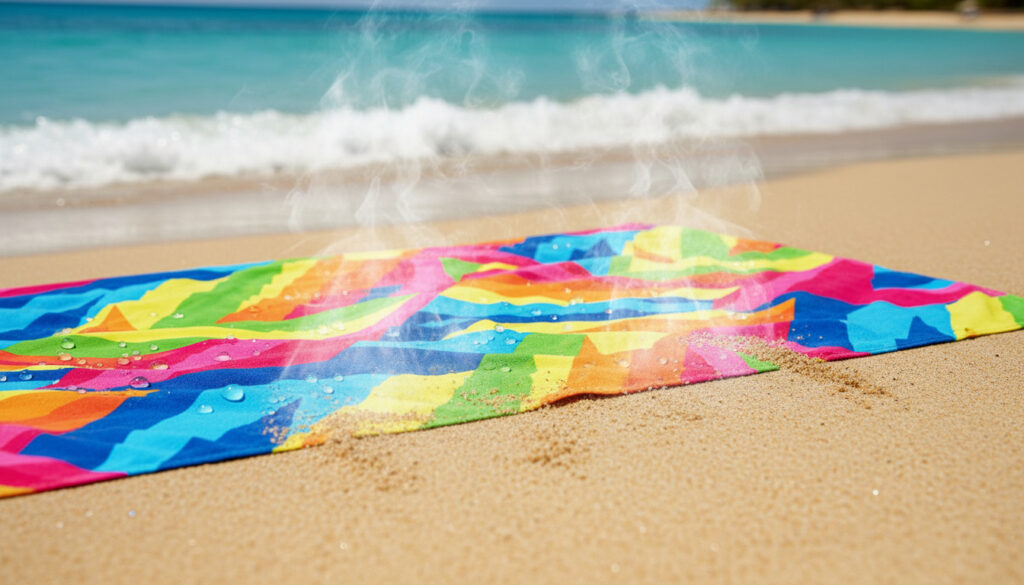
Dock and Bay Towels – Quick-Dry Sand-Resistant Review
Dock & Bay towels have emerged as a prominent option in the microfiber beach towel category, distinguished by their rapid drying capabilities and sand-resistant properties. These lightweight towels target travelers, gym enthusiasts, and beachgoers who prioritize packability over traditional cotton plushness. Independent laboratory evaluations conducted in 2024 have validated their performance in key areas, though user feedback indicates trade-offs regarding thickness and tactile comfort compared to terrycloth alternatives.
The brand occupies a specific niche within the broader towel market, emphasizing functional design for active lifestyles. Unlike conventional cotton beach towels that trap sand and retain moisture, Dock & Bay’s smooth microfiber construction allows particles to shake off easily while drying significantly faster than natural fiber counterparts. However, verified details regarding the company’s origins, manufacturing certifications, and specific sustainability credentials remain limited in available testing documentation.
Are Dock & Bay Towels Good?
Superior sand resistance, rapid drying, lightweight packability, and durable construction that withstands repeated washing.
Thinner profile feels less plush than cotton; lower absorbency compared to premium terrycloth; isolated reports of color bleeding.
Beach outings, post-gym sessions, travel packing, and hair drying where quick-dry functionality outweighs luxury texture.
Top performer in 2024 Good Housekeeping Institute evaluations for sand resistance and wash durability.
- Sand repels immediately from the smooth microfiber surface, requiring only shaking to remove particles even when wet.
- Drying speed exceeds that of plush cotton towels, making them suitable for multiple daily uses.
- Compact rolling capability allows storage in included carrying cases without retaining sand.
- Machine wash resilience has been confirmed through repeated laboratory washing cycles without shrinkage.
- Size options include extra-large dimensions approximately 40” x 68” or larger for beach lounging.
- Texture trade-off presents as smooth rather than plush, prioritizing function over tactile luxury.
- Hanging loops and finished ends add practical convenience for drying and storage.
| Feature | Specification |
|---|---|
| Material Composition | Smooth microfiber (polyester/polyamide blend) |
| Dry Speed | Among fastest tested; significantly faster than cotton |
| Sand Resistance | Excellent; particles remain on surface for easy removal |
| Absorbency | Good for microfiber; less than cotton terrycloth |
| Durability | No significant appearance change after Lab wash testing |
| Beach Size | Extra-large (~40″ x 68″ and larger) |
| Packability | Rolls compactly into carrying case |
| Care Requirements | Machine washable; color-fast in testing |
| Weight | Lightweight (comparable to camping microfiber standards) |
| Eco-Certifications | None noted in verified reviews |
What Are Dock & Bay Towels Made Of?
Dock & Bay towels utilize a smooth microfiber construction specifically engineered for sand resistance and rapid moisture wicking. The synthetic material creates a surface that prevents sand from embedding within the fibers, instead allowing particles to rest on top for effortless shaking. This composition differs fundamentally from looped cotton terrycloth, trading plushness for functional performance in outdoor and travel environments.
Are They Eco-Friendly?
Verified reviews from 2024-2025 do not specify Dock & Bay towels as being manufactured from recycled materials or carrying specific environmental certifications. Unlike hemp-based alternatives such as Lava Linens Travera, which emphasize sustainable sourcing, Dock & Bay’s microfiber products have not been validated as eco-friendly in tested documentation. The material’s synthetic nature raises standard microfiber concerns regarding microplastic shedding, though no specific testing data on environmental impact was identified in available sources.
While marketed for sustainable travel use, independent testing sources do not confirm recycled content or organic certifications for Dock & Bay microfiber lines. Consumers seeking verified eco-friendly materials should examine specific product labeling directly.
Are Dock & Bay Towels Worth the Money?
Value assessments indicate these towels justify their mid-range price point for users prioritizing portability and sand-free convenience over absorbent luxury. Analysts have characterized them as “the best beach towel ever” for convenience-oriented scenarios, particularly when packability and quick-dry functionality are essential. However, for users seeking maximum absorbency or plush lounging comfort, premium cotton alternatives may provide better tactile satisfaction despite inferior drying speeds.
Microfiber vs. Cotton Terrycloth
When compared to Turkish or Egyptian cotton terrycloth, Dock & Bay towels demonstrate significantly faster drying times and superior sand repellency. Cotton towels trap sand within their loops and retain moisture for extended periods, whereas microfiber sheds both sand and water rapidly. Conversely, cotton offers greater absorbency per square inch and a softer, more luxurious feel against skin, making it preferable for stationary beach lounging rather than active use. The choice depends on whether travel efficiency or relaxation comfort takes precedence.
How They Compare to Competing Microfiber Brands
Within the microfiber category, Dock & Bay distinguishes itself through exceptional sand resistance validated in beach-specific laboratory tests. Competing products such as the Matador NanoDry offer comparable drying speeds and packability, while the Rainleaf PackTowl provides similar absorbency at a lower price point, though users have criticized its stiffness and unnecessary stuff sack. The REI Multi-Towel offers enhanced softness through a terry-cloth-like texture but does not match Dock & Bay’s sand-shedding efficiency. Sea to Summit’s Tek towel performs similarly in drying tests but lacks the beach-specific optimization found in Dock & Bay’s design.
For travelers weighing options, Best Camping Towels provides additional context on ultralight alternatives, while beach-specific comparisons can be found in evaluations of Best Beach Towels.
| Towel | Material | Dry Speed | Sand Resistance | Texture | Price Tier |
|---|---|---|---|---|---|
| Dock & Bay | Microfiber | Very fast | Excellent | Smooth, less plush | Mid-range |
| Cotton Terry | 100% Cotton | Slow | Poor | Very plush | Low-Mid |
| Matador NanoDry | Polyester | Fastest tested | Good | Thin, multi-use | $35 |
| Rainleaf PackTowl | Microfiber | Fast | Good | Stiff | $9-22 |
| REI Multi-Towel | 85% Poly/15% Nylon | Moderate | Good | Terry-soft | Mid-range |
How Do You Wash and Care for Dock & Bay Towels?
Maintenance protocols follow standard machine washing procedures without special requirements. Laboratory testing confirmed that these towels hold color and shape consistently through multiple wash cycles, showing no significant shrinkage or deterioration. However, user-generated reviews outside controlled testing environments have reported isolated incidents of color bleeding during initial washes, suggesting caution when mixing with light-colored laundry during first uses.
What Sizes Are Available?
The product line includes extra-large dimensions suitable for adult beach lounging, typically measuring approximately 40 inches by 68 inches or larger, though exact size charts were unavailable in testing documentation. Smaller variants accommodate gym use and hair drying, with comparable microfiber towels in the category ranging from 52 x 24 inches to 71″ x 35″. All sizes feature compact rolling capability that fits into provided carrying cases designed to contain residual sand during transport.
While Good Housekeeping Lab tests observed no color bleeding, some online reviewers report dye transfer during initial washes. Washing separately or with similar colors for the first few cycles is advisable. For more information on this brand, check out this review of Dock and Bay towels at Cool Math Games Unblocked.
The included carrying case contains sand residue effectively. Rolling the towel while still slightly damp does not compromise the material, though complete drying before storage prevents mildew in humid climates.
Select extra-large sizes for full beach coverage and lounging. Smaller dimensions suit gym bags and hair turbans, with hanging loops facilitating air-drying between uses.
What Is the Testing Timeline for Dock & Bay Towels?
- — Good Housekeeping Institute Evaluation: Dock & Bay towels undergo laboratory testing for sand resistance, absorbency, and wash durability, receiving high ratings in all categories.
- — Consumer Reports Assessment: Independent testing confirms sand-repellent properties when wet, validating manufacturer claims regarding beach-specific functionality.
- — Camping Towel Comparative Analysis: TreeLine Review evaluates Dock & Bay against specialized camping microfiber brands, noting superior sand resistance but comparable drying speeds to competitors like Matador and Sea to Summit.
- — Market Trend Confirmation: TowelHub industry analysis identifies microfiber beach towels, including Dock & Bay, as maintaining dominance in travel categories due to superior drying performance versus cotton.
What Has Been Verified vs. What Remains Unclear?
Established Facts
- Microfiber construction provides superior sand resistance compared to cotton, verified through laboratory shake tests.
- Drying speed significantly exceeds that of plush cotton towels, making them suitable for multiple daily uses.
- Material withstands repeated machine washing without shrinkage or significant appearance changes.
- Towels are available in extra-large beach dimensions approximately 40″ x 68″ and larger.
- Smooth texture is less plush than cotton terrycloth, a confirmed trade-off for packability.
Uncertain or Unverified
- Company founding date and UK origins mentioned in marketing lack verification in independent sources.
- Recycled material content and specific eco-friendly certifications are not confirmed in tested reviews.
- Long-term user durability beyond laboratory wash testing remains undocumented for periods exceeding one year.
- Odor resistance properties have not been specifically evaluated in available testing documentation.
- Exact size specifications and charts were unavailable in reviewed testing materials.
Why Do Microfiber Beach Towels Matter?
The evolution of beach accessories reflects broader shifts in travel behavior toward lightweight, multi-functional gear. Traditional cotton towels, while luxurious, present practical challenges for modern travelers: they occupy significant luggage space, retain moisture that promotes mildew, and trap sand that continues shedding into cars and accommodations for days. Microfiber alternatives like Dock & Bay address these friction points through material science that prioritizes efficiency over tradition.
This category serves specific use cases where convenience outweighs sensory luxury. Gym enthusiasts require towels that dry between equipment rotations. Digital nomads need packable items that don’t consume carry-on allowances. Beachgoers in windy, sandy environments benefit from textiles that don’t retain grit. The trade-off—accepting a thinner, less enveloping texture—represents a calculated choice for mobility that aligns with contemporary active lifestyles.
What Do Laboratory Tests Reveal?
Independent validation provides specific insights beyond marketing claims. Testing protocols examined real-world stressors including repeated laundering, saturated sand exposure, and drying time measurements against control fabrics.
“A towel I would want to wrap up in.”
— Good Housekeeping Institute Lab Analyst, 2024 Beach Towel Evaluation
Analysts specifically noted the “luxe finished ends” and “soft plush feel” despite the microfiber classification, suggesting that material quality varies significantly within the synthetic category. The evaluation emphasized sand resistance as the distinguishing feature, with particles releasing immediately upon shaking rather than requiring vigorous beating or washing to remove.
Final Assessment
Dock & Bay towels deliver verified performance for travelers, beachgoers, and gym users who prioritize quick-dry functionality and sand resistance over plush absorbency. The 2024 laboratory testing confirms their durability and practical design, while user feedback highlights the necessary compromise of thinner texture. Those seeking maximum comfort for stationary lounging may prefer cotton alternatives, but for active use requiring packability, these towels represent a data-supported investment. Further details on comparable options appear in comprehensive guides to Best Beach Towels.
Common Questions
Do Dock and Bay towels smell?
Available testing documentation does not specifically evaluate odor resistance properties. The quick-dry microfiber material theoretically reduces mildew risk compared to cotton, but no verified claims regarding antimicrobial treatments or smell prevention have been identified in laboratory reviews.
Which Dock and Bay size works best for beach use?
Extra-large sizes approximately 40 inches by 68 inches or larger provide adequate coverage for adult beach lounging. These dimensions accommodate full-body lying while maintaining the lightweight properties that distinguish the brand from heavier cotton alternatives.
Are Dock and Bay hair towels effective?
The microfiber construction suits hair drying through rapid moisture wicking and reduced bulk compared to standard bath towels. The smooth texture minimizes snagging, while the compact size fits easily into gym or travel bags for post-swim hair care.
Can Dock and Bay towels go in the dryer?
Machine drying is possible given the synthetic microfiber composition, though air drying occurs rapidly enough to make machine drying unnecessary. Laboratory wash tests focused on machine washing durability without specifying dryer protocols.
How do they perform for gym workouts?
The lightweight, quick-dry properties make them suitable for gym environments where towels must dry between equipment uses. The hanging loop facilitates locker storage, though the smaller absorbency compared to cotton requires more frequent wringing during high-sweat sessions.
Are they truly sand-free?
Laboratory testing confirms excellent sand resistance; particles rest on the surface rather than embedding in fibers. Simple shaking removes sand effectively even when the towel is wet, outperforming cotton terrycloth which traps particles within its loops.
Do the colors fade after washing?
Good Housekeeping Lab testing observed no significant color change or appearance alteration after repeated wash cycles. However, isolated user reviews mention initial color bleeding, suggesting washing dark colors separately during first uses.
More related posts
 Neil Warnock: Current Role, Net Worth & Career
 Walk in Centre Near Me: Urgent Care & Injury Units Ireland
 Judy Warren: The Real Life Behind The Conjuring
 Jet2 Plane Smoke Alert at Lanzarote Airport: What We Know
 Diane Morgan: Personal Life, Career, and Net Worth
 Stratford upon Avon Weather: Forecast, Hourly & Warnings
 August Ames: Biography, Career, Controversy, and Death
 Iga Swiatek: Career, Ranking & Collins Controversy