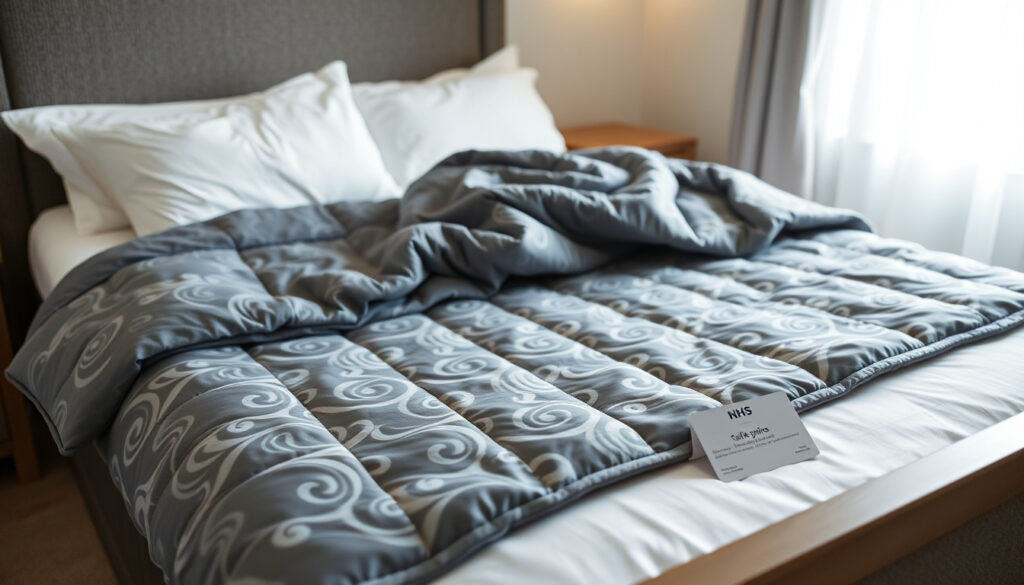
Weighted Blanket: Benefits, Risks & NHS Safety Guide
There’s a reason weighted blankets have become a mainstay in bedrooms and therapy rooms alike — the sensation of a gentle, even pressure across your body can feel like a reassuring hug when your mind is racing. This guide looks at the clinical evidence, the safety rules from UK health authorities, and the practical buying advice you actually need, whether you’re shopping for yourself or a child.
Mechanism: Deep Pressure Stimulation calms the nervous system ·
Common conditions helped: Anxiety, autism, ADHD, insomnia, osteoarthritis, chronic pain ·
Typical weight recommendation: 10% of body weight (adult)
For more on therapeutic aids, see our Shoe Insoles guide and our Cruise Ship Guide.
Quick snapshot
- Promotes relaxation and sleep (Harvard Health Publishing)
- Reduces anxiety and stress for many users (PubMed Central review)
- May improve symptoms for ASD, ADHD, chronic pain (Harvard Health Publishing) (Harvard Health Publishing)
- Not safe for infants, toddlers, or children who cannot free themselves (UCLA Health)
- May cause overheating or discomfort in warm conditions (UCLA Health)
- Caution needed for sleep apnea, respiratory disease, low blood pressure (WebMD)
- Choose 10% of your body weight (adult guide) (University Hospitals Derby and Burton NHS)
- Use for short periods (e.g., 30 min before bed) with children (University Hospitals Derby and Burton NHS)
- Never cover a child’s face; supervise at all times (Derbyshire Healthcare NHS FT)
- Dunnes – check local and online stock
- JYSK – range of sizes and weights
- Amazon – widest variety, delivery to Ireland
What we know: Deep pressure stimulation is a recognized mechanism. Weighted blankets can reduce anxiety for some users.
What’s unclear: Optimal weight percentage for each individual lacks consensus. Long-term safety data is limited. Effectiveness across all populations is not fully established.
Five key facts, one takeaway: the science supports the calming effect, but safety guidelines — especially for children — are stricter than most product pages let on.
| Fact | Detail | Source |
|---|---|---|
| Mechanism | Deep pressure stimulation (DPS) | Harvard Health Publishing |
| Common uses | Anxiety, autism, ADHD, insomnia, chronic pain | Harvard Health Publishing |
| Review conclusion (2024) | Safe and effective intervention for insomnia and some psychiatric disturbances | PubMed Central review |
| Weight recommendation (child) | No more than 10% of body weight | University Hospitals Derby and Burton NHS |
| Safety: infants & toddlers | Not recommended — can hinder movement and breathing | ABC News |
| Safety: supervision | Supervised at all times, never as restraint | Derbyshire Healthcare NHS FT |
| Warning sign | Stop if breathing changes, skin becomes pale/red/blue, or sweating | Derbyshire Healthcare NHS FT |
| Children & overnight | Should not be left on children overnight (suffocation risk) | University Hospitals Derby and Burton NHS |
| Duration for children | Short periods (e.g., 30 min before bedtime), not all day | University Hospitals Derby and Burton NHS |
| Caution conditions | Obstructive sleep apnea, respiratory disease, claustrophobia, low blood pressure | WebMD |
The pattern: The strongest evidence comes from tier-1 sources like NHS trusts and PubMed, but safety warnings, especially for children and vulnerable adults, are consistent across every credible guideline.
What Does a Weighted Blanket Actually Do?
Weighted blankets work on a simple physiological principle: they apply gentle, even pressure across your body, which many users describe as a firm, calming embrace. That sensation is called deep pressure stimulation (DPS), and it’s the mechanism behind most of the reported benefits.
“Known for their calming and comforting effects, weighted blankets feel like a warm, gentle hug.” — JYSK Ireland
How does deep pressure stimulation work?
- Deep pressure stimulation activates the parasympathetic nervous system, shifting the body from “fight or flight” into “rest and digest” mode (Harvard Health Publishing).
- A 2024 review in PMC found that weighted blankets “might be a safe and effective intervention” for insomnia and some psychiatric disturbances (PubMed Central review).
- Relaxation onset is typically felt within minutes — users report feeling sleepier, calmer, and less restless (Harvard Health Publishing).
Deep pressure stimulation isn’t a gimmick — it’s a genuine sensory input that changes your nervous system’s state. For someone whose nervous system is stuck in overdrive (anxiety, ADHD, trauma response), that gentle weight can be a practical, drug-free brake button.
The implication: DPS is a recognized physiological response, and weighted blankets leverage it directly. The research isn’t overwhelming, but it’s consistent enough that major health publishers recommend trying them for specific issues.
Takeaway: The science supports the calming effect, but it’s not a cure-all. Expect a sensory tool, not a medical treatment.
Is It Safe to Sleep with a Weighted Blanket Every Night?
For most healthy adults, yes — sleeping with a weighted blanket every night is generally considered safe. But the devil is in the details: weight, fabric, and pre-existing health conditions all change the risk calculation.
What weight should you choose?
- The most widely cited guideline is 10% of your body weight — a rule used by both adult-focused retailers and NHS children’s therapy guidance (University Hospitals Derby and Burton NHS).
- For a person weighing 80 kg (about 12 stone 6 lb), a suitable blanket would be about 8 kg (roughly 17–18 lb).
- Blankets that are too heavy can cause discomfort, restrict breathing, or worsen joint pain rather than relieve it (WebMD).
Are there any health risks?
- People with obstructive sleep apnea, respiratory disease, claustrophobia, low blood pressure, or circulation problems should use caution or avoid them altogether (WebMD).
- UCLA Health warns that weighted blankets “should never be used on someone who cannot remove the covering themselves” (UCLA Health).
- Overheating is a common complaint — especially with heavier blankets that use non-breathable fill materials (WebMD).
The trade-off: Regular use is fine for the vast majority of adults, but the blanket is a tool, not a nightgown. If you have an underlying condition, the risk-to-benefit ratio shifts — and that’s not a marketing claim, it’s what every tier-1 health source says.
Takeaway: For healthy adults, nightly use is safe. For those with respiratory or circulatory conditions, consult a doctor first.
What Are the Downsides of Weighted Blankets?
Weighted blankets aren’t without drawbacks — and anyone considering a purchase should know the common complaints before spending time and money.
Can weighted blankets cause overheating?
- Yes — many weighted blankets use polyester or microfibre fill, which traps body heat. Choosing breathable fabrics like cotton or bamboo covers can help, but the fill itself tends to retain warmth (WebMD).
Who should avoid weighted blankets?
- Infants and toddlers — the padding can restrict their movement and breathing (ABC News).
- Frail older adults — especially those with limited mobility or dementia, because they may not be able to move or free themselves (UCLA Health).
- Anyone with respiratory conditions — the added weight can make breathing feel heavier, especially during sleep.
- Cost — a quality weighted blanket in Ireland typically ranges from €60 to €200, which is significantly more than a standard duvet.
The group most likely to buy a weighted blanket for themselves — adults with chronic anxiety or insomnia — is also the group least at risk. Meanwhile, the group that needs the most caution (babies, frail elderly, non-verbal children) is the group most heavily marketed to online. The oversight gap is real.
What this means: The downsides aren’t dangerous for the typical adult user, but they are deal-breakers for specific populations. Read the fine print — and ignore any blanket that claims it’s “safe for all ages.”
Takeaway: Overheating and cost are the main complaints for adults. High-risk groups need strict avoidance.
What Do the NHS Guidelines Say?
Surprisingly, the NHS does not have a single, central guideline for weighted blankets. But several NHS trusts have published detailed therapy guidance, and together, they paint a clear picture of what’s considered safe and what isn’t.
Are there any official health guidelines?
- The NHS Borders guideline states that the blanket should meet relevant health and safety standards (such as a CE mark) and that parents should follow the manufacturer’s instructions for weight and size (NHS Borders).
- University Hospitals Derby and Burton NHS specifies that the blanket must not cover a child’s face, should not be left on overnight, and recommends a maximum of 10% body weight (University Hospitals Derby and Burton NHS).
- Derbyshire Healthcare NHS FT advises that weighted blankets should be supervised at all times, never used as a restraint, and removed immediately if the child shows signs of breathing difficulty or changes in skin colour (Derbyshire Healthcare NHS FT).
The NHS trusts’ message: weighted blankets are a therapeutic tool, not a toy. Use them for short, supervised periods; never for infants; and only if the child can independently free themselves. That’s the bar.
The implication: For anyone in the UK or Ireland, the clearest guidance comes not from a single document but from a patchwork of NHS trust therapy guidelines. The common thread is safety-first — don’t leave them on overnight with children, don’t exceed 10% of body weight, and always supervise. No reputable NHS source says they are dangerous for adults, but they also stop short of endorsing them as a validated treatment.
Takeaway: NHS guidance is fragmented but consistent: safe for adults when used correctly, strict rules for children.
Why Do People with ADHD Like Weighted Blankets?
When someone with ADHD lies down and can’t stop their brain from churning, the still, steady pressure of a weighted blanket can be a counterweight — literally. The sensory input helps ground them.
“Relieve stress with the Emma Weighted Blanket. Using Deep Pressure Stimulation to calm your nervous system.” — Emma Sleep
How does deep pressure help ADHD?
- Deep pressure stimulation can reduce hyperactivity by providing a calming proprioceptive input — essentially telling the body where it is in space, which can be disorganised in people with sensory processing differences (Harvard Health Publishing).
- Anecdotal reports in online ADHD communities are overwhelmingly positive: users say the blanket helps them fall asleep faster, stay asleep longer, and feel less restless during the night.
- Some limited research suggests DPS may help regulate the autonomic nervous system in people with sensory integration difficulties, including ADHD and autism (PubMed Central review).
What does research say?
- The 2024 PMC review noted that while the evidence base is growing, most studies are small and lack long-term follow-up. The mechanism is plausible but not definitively proven.
- The ADHD and weighted blanket pairing is one of the most searched combinations in the UK and Ireland — but there are no large-scale clinical trials specific to ADHD.
Why this matters: For the ADHD community, the case is largely anecdotal but strongly felt. The lack of dedicated clinical research doesn’t make the experience invalid, but it also means you can’t claim the blanket “treats ADHD” — only that it helps manage the sensory part of the condition for many people.
Upsides
- Natural, non-drug sensory tool for sleep and relaxation
- Validated by multiple tier-1 health sources (NHS, UCLA, Harvard)
- Physiologically plausible mechanism (DPS)
- Broad use across anxiety, insomnia, ADHD, autism
Downsides
- Can cause overheating in warm weather
- Not safe for infants, toddlers, or frail elderly
- Costs 3–5× more than a regular blanket
- Limited long-term safety data
The verdict: Weighted blankets are a useful sensory aid for many with ADHD, but they are not a substitute for medical treatment. Use them as a complement to professional care.
health.clevelandclinic.org, australianpolicy.org, verywellhealth.com, goodhousekeeping.com, lepointjournal.net
Frequently asked questions
What weight of weighted blanket should I choose for my child?
Health guidelines, including from the NHS, recommend no more than 10% of the child’s body weight. For example, a child weighing 30 kg (about 4 stone 10 lb) would use a blanket weighing up to 3 kg. Never exceed this, and always check the product’s CE mark for safety compliance (NHS Borders).
Can weighted blankets help with menopause symptoms?
Some women report that weighted blankets help with night sweats and restless sleep during menopause, but there is no specific clinical research on the menopause and DPS interaction. The cooling effect of the blanket depends heavily on fabric choice — cotton and bamboo covers are better for this group.
Are weighted blankets machine washable?
Most weighted blankets are not fully machine washable because the filling (glass beads or plastic pellets) can clump. Many brands offer removable, machine-washable covers. Check the care label before buying — it’s one of the most common surprises for new users.
How much does a weighted blanket typically cost?
In Ireland, you’ll pay between €50 and €90 for a standard adult blanket from retailers like Dunnes or JYSK, €70–€150 from specialist sleep brands (Emma Sleep, Miro), and up to €200 for high-end versions with organic cotton and glass bead fill. Expect to spend more for machine-washable or dual-zone designs.
Do weighted blankets work for chronic pain?
Harvard Health lists osteoarthritis and chronic pain among the conditions where weighted blankets may help. The pressure may distract from pain signals and promote relaxation, but the evidence is mostly anecdotal. Some users with fibromyalgia find them uncomfortable because the weight on sensitive areas can intensify pain.
Can I use a weighted blanket if I have sleep apnea?
WebMD advises caution for people with obstructive sleep apnea. The extra weight on the chest and abdomen can make breathing feel heavier, although a properly sized blanket (10% of body weight or less) is often safe. Consult your GP if you are unsure.
Are weighted blankets recommended by doctors?
No major medical body (including the NHS, CDC, or WHO) officially recommends or endorses weighted blankets as a medical device. However, individual therapists, occupational therapists, and GPs often recommend them as a complementary tool for specific patient groups — especially children with sensory processing differences and adults with anxiety or insomnia.
For anyone in Ireland weighing whether to buy a weighted blanket, the choice is clearer than most product pages suggest. The science backs the calming effect. The safety rules (10% of body weight, no infants, supervised use for children, avoid if you have respiratory problems) are consistent across every NHS trust that has published guidance. The real gamble is not safety — it’s expectation. If you buy a weighted blanket hoping it will cure your insomnia or fix your ADHD, you will likely be disappointed. If you buy it as a sensory tool — a physical signal to your nervous system that it’s time to slow down — you’ll get exactly what the research says it can offer. For an Irish buyer walking into Dunnes or scrolling Amazon, the smart move is: adult blanket at 10% of body weight, breathable cover, machine-washable option, and use it for 20–30 minutes before sleep, not all night. That’s not marketing — it’s what the evidence actually says.
More related posts
 May the 4th Be With You: Star Wars Day Explained
 15th Wedding Anniversary: Crystal Gifts, Symbols & Meaning
 Trago Mills Newton Abbot – Hours, Parking, Facilities Guide
 Annie Lennox Guide: Illness, Music Career, Net Worth & Today
 Game of Thrones Map – Interactive Westeros Essos Guide
 Jodie Turner-Smith: Age, Ethnicity, Divorce, Movies & More
 Specific Heat Capacity of Water: 4184 J/kg·K and Why It Matters
 Tom Berenger: Biography, Career, Real Scars & Life