Anne Frank: Her Diary, Life in Hiding, and Holocaust Legacy
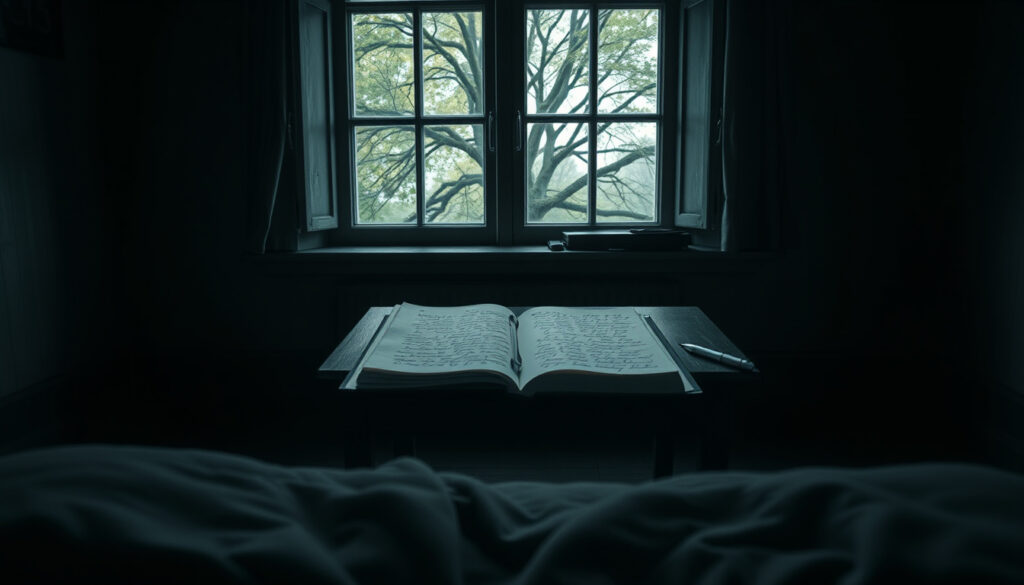
A teenage girl locked in a hidden room for two years, writing about her first kiss, her period, and her dreams of becoming a writer. That diary would later become one of the most widely read books in the world.
Born: June 12, 1929, Frankfurt, Germany ·
Died: February 1945 (age 15), Bergen-Belsen ·
Diary Published: 1947 ·
Languages of Diary: Over 70 ·
People in Hiding: 8
Quick snapshot
- Born June 12, 1929, in Frankfurt, Germany (National WWII Museum)
- Wrote diary from 1942 to 1944 while in hiding (Anne Frank House)
- Arrested August 4, 1944 (Anne Frank House)
- Died in Bergen-Belsen in early 1945 (Anne Frank House)
- Exact date of death (commonly February 1945, but not recorded) (Anne Frank House)
- Precise wording of last words (multiple accounts) (Anne Frank House)
- Who betrayed the Secret Annex remains unknown (Anne Frank House)
- Number of translations commonly cited as 70 but may vary (Anne Frank House)
- Exact date of the move to Amsterdam (1933–1934) is sometimes ambiguous (Anne Frank House)
- July 6, 1942: Family goes into hiding (Anne Frank House timeline)
- August 4, 1944: Discovery and arrest (Anne Frank House)
- February 1945: Death in Bergen-Belsen (Anne Frank House)
- June 1947: Diary published (Anne Frank House timeline)
- Anne Frank House continues global education programs (Anne Frank House)
- Diary remains a core text in Holocaust studies worldwide (Anne Frank House)
Seven key facts about Anne Frank, from her birth to the global reach of her diary.
| Label | Value |
|---|---|
| Full Name | Annelies Marie Frank |
| Born | June 12, 1929, Frankfurt, Germany |
| Died | February 1945, Bergen-Belsen concentration camp |
| Parents | Otto Frank and Edith Frank-Holländer |
| Sister | Margot Frank |
| Nationality | German (stateless from 1941) |
| Notable Work | The Diary of a Young Girl (1947) |
Who is Anne Frank and why is she so famous?
Anne Frank was a Jewish girl who went into hiding with her family during the Nazi occupation of the Netherlands. Her diary, written between 1942 and 1944, became a global symbol of the Holocaust and human resilience after her death in Bergen-Belsen. The National WWII Museum calls it a crucial firsthand account of Dutch Jews under Nazi persecution.
What was Anne Frank’s early life like?
Anne was born on June 12, 1929, in Frankfurt, Germany. Her family moved to Amsterdam in 1933 after Hitler came to power, according to the Anne Frank House. She grew up in a liberal Jewish household, attended school, and had a close relationship with her father, Otto.
Why is Anne Frank’s diary important?
The diary offers an intimate daily record of a teenage girl’s life in hiding, covering normal adolescent concerns alongside the terror of being discovered. The Holocaust Memorial Day Trust notes that the diary gives insight into the persecution Jewish people faced under the Nazi regime. It has been translated into about 70 languages, per the Anne Frank House.
The implication: the diary’s dual nature allows educators to connect students emotionally to history.
What is the story of Anne Frank about?
The diary chronicles Anne’s life from her 13th birthday in 1942 until the family’s arrest in 1944, documenting daily routines, fears, and dreams while hidden in the Secret Annex.
Where did Anne Frank hide?
The Frank family hid in a concealed set of rooms behind a bookcase at Prinsengracht 263 in Amsterdam. The Anne Frank House reports that the hiding place was a secret annex above Otto Frank’s office. They were aided by employees like Miep Gies and Bep Voskuijl, who brought food and news.
Who else was in the Secret Annex?
Eight people lived in the annex: Anne, her parents Otto and Edith, her sister Margot, the van Pels family (Hermann, Auguste, and their son Peter), and later dentist Fritz Pfeffer. The Anne Frank House details the group’s dynamics through Anne’s diary entries.
Eight people confined to less than 500 square feet for two years, yet Anne’s diary captures not just claustrophobia but also moments of laughter, love, and hope. The tension between confinement and inner freedom is what makes the diary so compelling.
The pattern: confinement didn’t extinguish Anne’s emotional range.
What happened to Anne Frank when she was found?
The annex was discovered on August 4, 1944, after a tip-off that remains unsolved. The occupants were arrested and sent to concentration camps.
How were the Franks discovered?
An anonymous call led the German security police to the Secret Annex. The identity of the betrayer has never been confirmed, though several theories exist. The Anne Frank House notes that the exact circumstances of the betrayal are still unclear.
Where was Anne sent after arrest?
After arrest, Anne was taken to Westerbork transit camp, then to Auschwitz-Birkenau in September 1944. In November 1944, she and her sister Margot were transferred to Bergen-Belsen, where Anne died of typhus in early 1945, according to the Anne Frank House. The exact date of death is not recorded.
What this means: the unsolved betrayal mirrors the randomness of Nazi persecution.
What did Anne Frank say about menstruation?
Anne wrote about her first period on March 28, 1944, with a mix of wonder and curiosity. The entry is notable for its frank, personal tone about a subject that was taboo in the 1940s.
How did Anne describe her period in her diary?
She wrote: “I think what is happening to me is so wonderful, and I don’t just mean the changes taking place on the outside, but also what’s happening on the inside.” The Anne Frank House includes this entry in the complete works of her diary.
Why is this entry significant?
Anne’s open discussion of menstruation was unusual for her time, especially in a diary that would later be read by millions. It shows her desire to be honest about her body and her development, a theme that resonates with adolescent readers today.
Some editions of the diary originally omitted this entry because it was considered too intimate. The full, unexpurgated version wasn’t published until 1991, which means earlier readers missed a crucial part of Anne’s adolescent self-portrait.
The catch: censorship of Anne’s body narrative limits her full story.
Who gave Anne her first kiss?
Anne’s first kiss came from Peter van Pels, the teenage son of the other family in hiding, in April 1944. She recorded the moment in her diary as a milestone of adolescence.
What was Anne’s relationship with Peter van Pels?
Anne and Peter grew close during their months in hiding, sharing conversations and eventually a kiss. The Anne Frank House notes that Anne wrote about the kiss in detail, describing her emotions and the significance of the moment. Their relationship gave Anne a sense of companionship and normalcy amidst the danger.
Timeline
- June 12, 1929 – Anne Frank born in Frankfurt, Germany (National WWII Museum)
- 1933–1934 – Family moves to Amsterdam after Nazi rise (Anne Frank House)
- July 6, 1942 – Franks go into hiding in the Secret Annex (Anne Frank House timeline)
- August 4, 1944 – The hiding place is discovered; family arrested (Anne Frank House)
- September 1944 – Anne transported to Auschwitz-Birkenau (Anne Frank House)
- November 1944 – Anne and Margot moved to Bergen-Belsen (Anne Frank House)
- February 1945 – Anne dies of typhus (official estimate) (Anne Frank House)
- June 1947 – The Diary of a Young Girl published by Otto Frank (Anne Frank House timeline)
What is confirmed and what is still unclear
Confirmed facts
- Anne Frank was born on June 12, 1929, in Frankfurt, Germany (National WWII Museum)
- She wrote a diary while in hiding from 1942 to 1944 (Anne Frank House)
- The hiding place was discovered on August 4, 1944 (Anne Frank House)
- Anne died in Bergen-Belsen in early 1945 (Anne Frank House)
- The diary was published posthumously in 1947 (Anne Frank House timeline)
What’s unclear
- The exact date of Anne’s death (commonly cited as February 1945, but not recorded) (Anne Frank House)
- The precise wording of her last words (multiple accounts exist) (Anne Frank House)
- Who betrayed the Secret Annex remains unknown (Anne Frank House)
- Number of translations commonly cited as 70 but may vary (Anne Frank House)
- Exact date of the move to Amsterdam (1933–1934) is sometimes ambiguous (Anne Frank House)
Voices from the diary
“It’s really a wonder that I haven’t dropped all my ideals, because they seem so absurd and impossible to carry out. Yet I keep them, because in spite of everything, I still believe that people are really good at heart.”
Anne Frank, diary entry July 15, 1944 (Anne Frank House)
“[The diary] is a crucial firsthand account of Dutch Jews under Nazi persecution.”
National WWII Museum (source)
Anne wrote about her first period on March 28, 1944, saying she found the changes wonderful both inside and out (Anne Frank House). She described her first kiss with Peter van Pels, noting she got as much pleasure from sitting next to him as from the kissing (Anne Frank House).
Anne Frank’s diary is not just a record of persecution; it shows the emotional depth of a teenager who refused to let her circumstances define her inner world. The diary’s global reach—translated into more than 70 languages—means that millions of readers have encountered her voice. For educators, the diary remains a primary tool for teaching tolerance and the human cost of antisemitism. For readers, the challenge is to carry that awareness forward: to read Anne not as a distant symbol, but as a girl who loved, feared, and dreamed—and whose story demands we ask hard questions about how we treat others.
annefrank.org, deutschland.de, thehistorypress.co.uk, youtube.com, youtube.com, annefrankexhibit.org, mrparratore.weebly.com, britannica.com, hoteluriromania.com
Frequently asked questions
Why did Anne Frank call her father Pim?
Anne affectionately called her father Otto Frank “Pim,” a nickname she used in her diary. The Anne Frank House notes that the nickname reflects their close and loving relationship.
What was Anne Frank’s last diary entry?
Anne’s final diary entry is dated August 1, 1944, three days before her arrest. In it, she reflects on her two sides—one cheerful and one deeper—and wonders which will win out. The Anne Frank House provides the full text.
How old was Anne Frank when she started her diary?
Anne received the diary for her 13th birthday on June 12, 1942, and began writing two days later, on June 14, 1942 (Anne Frank House).
What is the name of Anne Frank’s diary?
Anne originally titled her rewritten version of the diary Het Achterhuis (The Secret Annex). It was published in Dutch on June 25, 1947, and later internationally as The Diary of a Young Girl (Anne Frank House timeline).
How long was Anne Frank in hiding?
Anne and her family were in hiding for two years and one month, from July 6, 1942, until their arrest on August 4, 1944.
What happened to Anne Frank’s father?
Otto Frank was the only member of the Secret Annex to survive the war. He returned to Amsterdam after liberation and published Anne’s diary in 1947. He later established the Anne Frank Foundation and dedicated his life to sharing her story (Anne Frank House).
Where is Anne Frank buried?
Anne Frank does not have a known grave. She died in Bergen-Belsen concentration camp, where she was buried in a mass grave. The Anne Frank House maintains a memorial at the camp site.
More related posts
 What Is a 401k? Plan Basics, How It Works & Irish Equivalent
 LA Knight: Career, Personal Life, Family & FAQ (2025 Update)
 American Akita: Loyal Guardian, Strict Social Code
 Cast of The Survivors: Netflix 2025 Full List & Roles
 Outlander: Blood of My Blood – Premiere, Episodes & Cast
 Isabela Merced: Diagnosis, Relationships & Personal Life
 How to Get Rid of a Stomach Ache in 5 Minutes: Fast Home Remedies
 Black Tie Event Dresses: A Complete Guide for Women