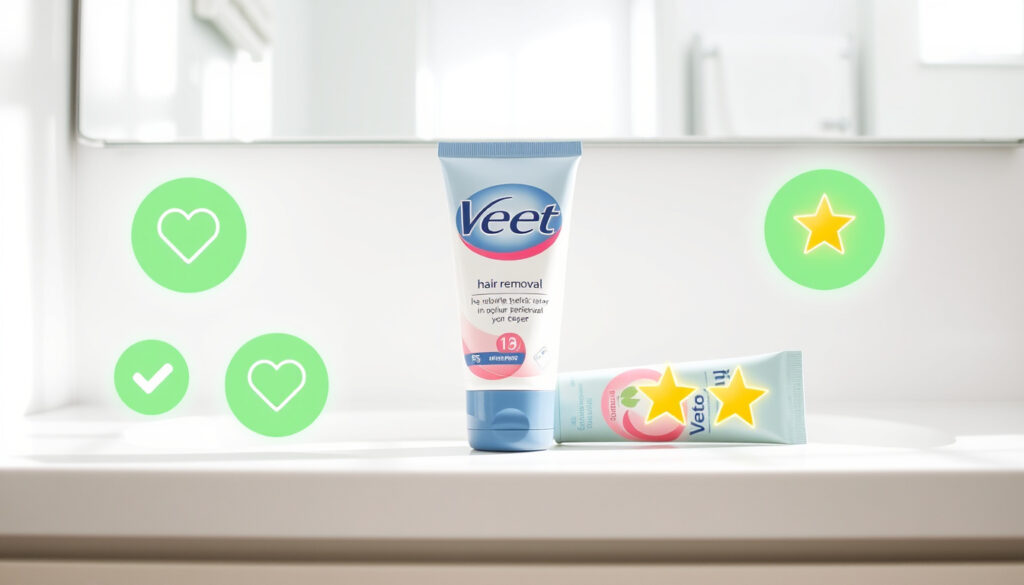
Veet Hair Removal Cream: How to Use, Safety & Reviews
If you’ve ever stood in the drugstore aisle wondering whether Veet cream actually works — and whether it’s safe to use anywhere beyond your legs — you’re not alone. The short answer is yes, it works. The longer answer involves reading the fine print carefully, because what Veet can do for your bikini line differs sharply from what it should never touch near your genitals. This guide cuts through the confusion with verified product claims and medical expertise.
Application Time: 5-10 minutes · Smoothness Duration: Up to 2× longer than shaving · Men’s Formula: As little as 4 minutes · Key Ingredients: Aloe vera & vitamin E · Skin Compatibility: Sensitive skin formulas available
Quick snapshot
- Standard application: 5–10 minutes max (Veet Official Demo)
- Suitable for bikini line external area only (Veet USA)
- Contains Aloe Vera & vitamin E for sensitive skin (Veet UK)
- Universal safety consensus for all intimate areas (no clinical consensus)
- Exact rates of chemical burn incidents (no centralized reporting)
- Long-term skin health data for repeated private-area use (no longitudinal studies)
- Veet Professional 2-minute formula currently available (Veet USA official product page)
- Patch-test guidance: apply before full use (WebMD medical guidance)
- Aftercare window: 24 hours before perfumed products (Veet UK official blog)
- Patch test every new Veet formula before full application
- Consult dermatologist for intimate-area use
- Follow exact timing per product type
| Label | Value |
|---|---|
| Brand Owner | Veet |
| Primary Use | Legs & body |
| Time to Apply | 5–10 minutes |
| Special Formulas | Sensitive, Men, Face |
| Key Benefit | Twice as long as shaving |
Is Veet cream better than shaving?
The comparison depends entirely on what you value in hair removal. For smoothness duration and reduced skin trauma, Veet has a measurable edge over razors.
Benefits of hair removal cream vs shaving
- Lasts up to twice as long as shaving before regrowth appears
- Works closer to the root by chemically weakening hair structure (Cleveland Clinic health resource)
- Eliminates razor nicks, cuts, and razor burn entirely
- Nearly painless application compared to waxing or tweezing
- Smoother skin texture without the stubble that razors leave behind
Creams avoid nicks but risk subtle chemical damage if left on too long. Shaving causes visible burns; creams can cause invisible burns that feel worse.
Duration of smoothness
Veet users report smooth skin lasting 3–5 days on average, compared to 1–2 days with standard shaving. The Veet Professional formula targets the full bikini area including external labia but explicitly warns against internal labia and mucosal membranes. Results vary by body area and individual hair growth cycles.
The implication: if you prioritize days between hair removal sessions, creams outperform razors. If you prioritize simplicity and zero chemical exposure, razors win.
Can I use Veet on private hair?
This is the question that generates the most confusion — and the most risk — because the answer is not simply yes or no. It depends entirely on which Veet product you own and where you’re planning to apply it.
Safety for private areas
The Veet Professional 2 Minute Cream labeling states it is suitable for “arms, underarms, legs, full bikini including external labia” but explicitly says to avoid “internal labia and mucosal membranes.” The standard Veet Sensitive Skin formula packaging, according to a product demonstrator, states it is “not suitable for use on the head, face, eyes, nose, ears, around the anos or genitals or even nipples.”
Medical guidance reinforces this boundary. WebMD advises using only creams specified for the body area, and the Cleveland Clinic notes that depilatory creams make hair structurally unstable rather than removing it at the root like waxing. Chemical burns are a documented risk especially in the groin area because the skin there is particularly sensitive, and those burns can be first-, second-, or third-degree.
Myths about hair removal creams on private parts
- Myth: “Veet is safe everywhere below the neck.” Fact: No Veet formula is cleared for internal genital use.
- Myth: “The more cream, the better the result.” Fact: Thick application increases chemical exposure time and burn risk.
- Myth: “If it doesn’t burn immediately, it’s safe.” Fact: Chemical burns can develop slowly and worsen after removal.
- Myth: “Natural ingredients like Aloe Vera make it safe for intimate areas.” Fact: The soothing agents reduce irritation but don’t neutralize the active chemicals that dissolve hair.
The skin of the external genitalia is thicker and more resilient than internal mucous membranes. This distinction is why Veet Professional can list “external labia” as approved while labeling internal labia as off-limits.
What are the disadvantages of Veet hair removal?
Veet works well under the right conditions, but it carries real risks that shaving doesn’t. Understanding the disadvantages lets you make an informed decision rather than discovering problems after they happen.
Potential side effects
- Chemical burns ranging from mild irritation to third-degree damage (WebMD medical resource)
- Skin darkening or hyperpigmentation in treated areas
- Allergic reactions to active ingredients, even with sensitive-skin formulas
- Rashes from pH alteration caused by the acidic chemicals that dissolve hair
- Unpleasant chemical odor during and after application
- Post-use sensitivity that typically subsides within hours but can persist
Skin sensitivity issues
Depilatory creams work by altering the protein structure of hair using alkaline chemicals. This same process affects skin to some degree. Dermatologists cited by makeO note they do not recommend hair removal creams for the pubic area due to the thin, sensitive nature of the skin there. Chemical burns occur when these acidic chemicals alter skin pH, causing damage that ranges from superficial irritation to deep tissue injury.
The convenience Veet offers comes with a chemical exposure trade-off. For areas with thin or sensitive skin, that trade-off rarely favors the cream.
The implication: Veet’s disadvantages are disproportionately concentrated in intimate areas. If you’re using it on legs and underarms, the risk profile is manageable with correct timing and a patch test. For private parts, the same product carries meaningfully higher risk.
Do you actually leave Veet on for 2 minutes?
The answer depends entirely on which Veet formula you purchased. Timing varies by product type, and getting it wrong in either direction — leaving it on too short or too long — compromises results.
Recommended application time
Veet Professional 2 Minute Cream works in exactly 2 minutes. The Veet UK blog and standard Veet Sensitive Skin formula allow 5–10 minutes maximum. The men’s formula acts in as little as 4 minutes.
Variations by product type
Each Veet formula has distinct timing requirements based on ingredient concentration and targeted body area.
| Product | Application Time | Notes |
|---|---|---|
| Veet Professional 2 Minute Cream | 2 minutes | Enriched with shea butter |
| Veet Sensitive Skin | 5–10 minutes | Aloe Vera & vitamin E |
| Veet Men’s Hair Removal Cream | 4 minutes | Easy rinse-off formula |
| Veet Face Cream | 1–3 minutes | Thinner skin, shorter time |
The rule across all Veet products: never exceed the maximum time listed on the packaging. WebMD’s guidance states to leave depilatory cream on for 3–10 minutes as per packaging instructions and to rinse immediately if burning occurs. Leaving cream on longer than directed does not improve hair removal — it only increases the risk of chemical burns.
Timing isn’t a suggestion — it’s a safety boundary. Set a timer, not an estimate.
The pattern: the faster the formula, the more concentrated the active ingredients. Professional 2-minute products are potent; leaving them on for 5 minutes as you would a sensitive-skin formula is unsafe.
Do you wet the area before using Veet?
Most people apply Veet wrong without realizing it. The preparation steps matter as much as the product itself for both effectiveness and safety.
Preparation steps
- Apply to dry skin: The area should be clean and dry, not wet. Water dilutes the active chemicals and weakens the cream’s effectiveness.
- Patch test first: Apply a small amount to the inner elbow or wrist 24 hours before full use (WebMD patch test guidance). Wait to see if redness, itching, or burning occurs.
- Do not use on broken or irritated skin: Even minor cuts or razor burn increase chemical absorption into the skin.
- Apply a thin, even layer: Thick application traps chemicals against the skin and extends exposure time unevenly.
What not to do after
- Do not wet the area immediately after removing cream: Rinse with water only, pat dry gently.
- Avoid antiperspirants and perfumed products for 24 hours after application (Veet UK aftercare guidance and Veet official application video)
- Skip sunbathing and tanning for 24 hours post-application
- Do not apply perfumed moisturizers immediately after — use unscented options only (WebMD post-use care)
The implication: Veet aftercare is as important as application. The 24-hour waiting window before using any scented products is non-negotiable for sensitive skin, and it becomes critical when used near intimate areas.
Veet Hair Removal Cream: Comparison at a Glance
Three Veet variants serve different needs and body areas, with meaningful differences in formulation and approved use zones.
| Feature | Sensitive Skin | Professional 2-Minute | Men’s Formula |
|---|---|---|---|
| Application Time | 5–10 minutes | 2 minutes | 4 minutes |
| Soothing Agents | Aloe Vera, Vitamin E | Shea butter | Eucalyptus oil |
| Bikini Line | External only | External labia included | Not specified |
| Face Use | Not recommended | Not recommended | Not recommended |
| Skin Type Target | All skin, hypoallergenic focus | Fast results, resilient skin | Thicker male body hair |
| Chemical Burn Risk | Lower | Higher (faster formula) | Moderate |
What this table makes clear: no single Veet product is designed for every body area and every skin type. The Professional 2-Minute cream’s speed comes with a potency trade-off. The Sensitive Skin formula’s gentleness comes with a longer wait time. Matching product to body area is not optional — it’s the difference between a smooth result and a chemical burn.
Upsides and Downsides
Upsides
- Longer smoothness than shaving — up to twice the duration
- No nicks, cuts, or razor burn compared to razors
- Works closer to the root by chemically weakening hair
- Nearly painless application
- Available in sensitive-skin formulas with soothing ingredients
- Fast options like the 2-minute Professional formula
Downsides
- Chemical burn risk, especially in sensitive areas
- Not approved for internal genital use on any formula
- 24-hour aftercare restrictions on perfumed products
- Potential skin darkening and allergic reactions
- Unpleasant chemical odor during application
- Requires precise timing; errors cause injury
How to Apply Veet: Step by Step
Follow these steps in order for safe and effective hair removal. Skipping steps — especially the patch test — is where most problems originate.
- Patch test (24 hours before): Apply a small amount of product to your inner elbow or wrist. Cover with a bandage and wait 24 hours. If any redness, itching, or burning occurs, do not use the product on your body.
- Prepare the area: Clean and dry the skin completely. Do not apply to wet skin. Ensure the area is free from cuts, razor burn, or irritation.
- Apply a thin, even layer: Using the spatula provided, spread the cream in a thin, even layer. Do not rub it in — just coat the surface where hair removal is desired.
- Set a timer: Place your device timer to the exact number of minutes specified on your product’s packaging. Do not rely on feel or guesswork.
- Rinse immediately: When the timer sounds, remove the cream immediately using the spatula or a soft cloth. Rinse the area gently with cool water only — no soap.
- Pat dry and apply unscented moisturizer: Gently pat the skin dry. Apply an unscented, hypoallergenic moisturizer or aloe vera gel.
- Wait 24 hours before using any perfumed products: No antiperspirants, scented lotions, perfumes, or sun exposure for a full day after application.
Remove the cream immediately, regardless of timer setting. Rinse the area with cool water for at least 10 minutes. Do not apply any products. Seek medical attention if burns appear blistered, white, or cover a large area.
What Experts Say
“AVOID CONTACT WITH INTERNAL LABIA AND MUCOSAL MEMBRANES.”
— Veet USA product labeling for Professional 2 Minute Cream
“It’s most likely to happen in the groin area because the skin there is sensitive. Chemical burns are painful and need medical help.”
— WebMD (Medical Resource)
“Consult a dermatologist before purchasing any hair removal cream for intimate areas.”
— Ulike (Beauty Blog)
The pattern that emerges from these sources is consistent: Veet is safe for specific external body areas when used exactly as directed, but the margin for error shrinks dramatically when you move toward intimate regions. The official product labeling, medical resources, and beauty industry guidance all converge on the same boundary — internal genital tissue is off-limits, period.
Summary
Veet hair removal cream delivers real advantages over shaving in smoothness duration and comfort, but those advantages disappear quickly when the product is applied to the wrong body area or left on too long. The Veet Professional 2-Minute formula is cleared for the external bikini line including external labia, while the standard Sensitive Skin formula is not. Chemical burns are a documented risk concentrated in the groin and intimate areas, and the 24-hour aftercare window for perfumed products is a non-negotiable part of the process, not an optional suggestion. For anyone considering Veet for private areas, the smartest first step is a conversation with a dermatologist — not a test run on sensitive skin.
Related reading: Evening Primrose Oil Benefits · Vitamin D3 and K2 Benefits
While Veet excels in quick painless application, the IPL hair removal guide details light-based devices for longer-lasting smooth skin results.
Frequently asked questions
What is the healthiest way to remove pubic hair?
Dermatologists generally recommend trimming with electric clippers or scissors for the safest pubic hair management. Waxing removes hair at the root but carries burn risk. Shaving is accessible but causes frequent razor burn. Depilatory creams like Veet are not recommended by dermatologists for the pubic area due to the thin, sensitive nature of the skin there.
What are Veet hair removal cream ingredients?
Veet Sensitive Skin formulas contain Aloe Vera and vitamin E for soothing. Veet Professional 2-Minute Cream is enriched with shea butter. Active ingredients typically include calcium thioglycolate or potassium thioglycolate, which chemically dissolve the keratin in hair. Full ingredient lists are printed on individual product packaging and may vary by region.
How long does Veet hair removal cream last?
Results typically last 3–5 days on the body, compared to 1–2 days with shaving. The smoothness duration depends on individual hair growth cycles and the body area. Veet claims smoothness lasting up to twice as long as shaving, though results vary by user and hair type.
Is Veet hair removal cream safe for face?
No standard Veet formula is approved for facial use. The face has thinner skin and mucous membranes near the eyes and lips that are particularly vulnerable to chemical burns. There are separate Veet products formulated specifically for facial use with shorter application times — use those, not body formulas.
Can men use Veet hair removal cream?
Yes. Veet makes a Men’s Hair Removal Cream formulated for thicker male body hair. Application time is approximately 4 minutes, shorter than the standard 5–10 minute formula. The men’s formula uses different active ingredient concentrations appropriate for coarser hair. It is not approved for facial hair or intimate male areas beyond external application to the body.
What not to do after using Veet?
After Veet application, do not apply antiperspirants, perfumes, scented lotions, or any perfumed products for 24 hours. Avoid sunbathing or tanning for 24 hours. Do not use soap directly on treated skin immediately after rinsing. Do not apply makeup or heavily scented body products to the area until the next day.
How much does Veet hair removal cream cost?
Prices vary by retailer, product size, and formula. Standard Veet Sensitive Skin creams typically retail between $5–$10 USD for standard sizes. Veet Professional 2-Minute Cream and specialty formulas may retail higher, generally in the $8–$15 range. Check current pricing at major retailers for your region.
More related posts
 Michelle Monaghan: Biography, Beauty Routine, Net Worth
 Anna Madeley: Biography, Movies, TV Shows, and Personal Life
 Mark Henry: Net Worth, Career, and the ‘Strongest Man’ Truth
 Ellen Barkin: Biography, Animal Kingdom Exit & More
 Sigourney Weaver: Biography, Name Origin, Height
 Steven Pressley: Player, Manager, and Dundee Head Coach
 Peep Show Bake Off: Where to Watch, Why Jez Missed Out & Who Won
 Jeff Nippard: Fiancée Death and Natty Debate