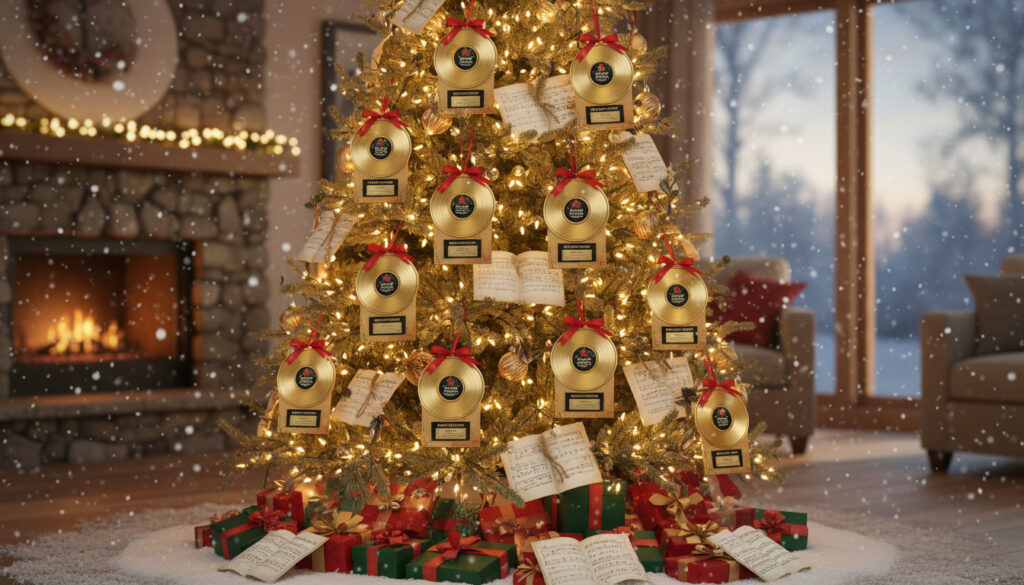
All I Want for Christmas Is You – Song History, Charts and Facts
“All I Want for Christmas Is You” stands as the definitive holiday anthem of the modern era. Released by Mariah Carey in 1994, the track has shattered commercial records across three decades, earning Diamond certification from the RIAA and claiming the longest-running #1 spot in Billboard Hot 100 history.
The song emerged from a deliberate effort to craft contemporary Christmas material. Carey co-wrote and co-produced the track with Walter Afanasieff during the summer of 1994, recording at The Hit Factory in New York. What began as an album cut for Merry Christmas evolved into a global phenomenon that dominates streaming platforms and radio playlists each holiday season.
Today, the single holds the distinction of being the best-selling holiday single by a female artist and the best-selling physical single in history. It has topped charts in 26 countries and continues to accumulate certifications, reaching 18x Platinum status in the United States by December 2025.
Who Wrote and Sings ‘All I Want for Christmas Is You’?
Mariah Carey performs the lead vocals on the track, with Walter Afanasieff contributing as co-writer, co-producer, and instrumentalist. According to RIAA documentation, Carey has identified this as the first composition she wrote specifically for the Merry Christmas album.
- Co-written and co-produced by Mariah Carey and Walter Afanasieff in August 1994
- Composed as original material alongside traditional holiday covers on the album
- Certified Diamond by RIAA in 2021 (10 million units), upgraded to 18x Platinum by December 2025
- Holds record for longest climb to #1 in Billboard Hot 100 history (25 years)
- First holiday ringtone certified double Platinum by RIAA
- Topped charts in 26 countries including Australia, Canada, France, and Germany
- Best-selling single by a female artist in Japan (Million certified)
| Attribute | Details |
|---|---|
| Length | 4:02 |
| Writers | Mariah Carey, Walter Afanasieff |
| Album | Merry Christmas (1994) |
| First Release | October 29, 1994 (Japan) |
| US Airplay Release | November 14, 1994 |
| RIAA Certification | 18x Platinum (as of Dec 2025) |
| Billboard Hot 100 Peak | #1 (22 non-consecutive weeks, 2019–2026) |
| Japan Oricon Peak | #2 (Million certified, 1995) |
When Was ‘All I Want for Christmas Is You’ Released?
The August 1994 Sessions
The track was recorded in August 1994 at The Hit Factory in New York City. This period marked the initial creative phase for Carey’s fourth studio album, which would blend original compositions with traditional Christmas standards. The recording utilized live instrumentation rather than samples, distinguishing it from contemporary holiday productions.
Strategic Global Rollout
Columbia Records executed a staggered international release strategy. The single debuted in Japan on October 29, 1994, as a CD single—nearly two weeks before American audiences heard it on radio. The United States received an airplay-only release on November 14, 1994, followed by UK maxi-singles on November 28 and December 5, 1994. These UK releases paired the track with “Miss You Most (At Christmas Time),” “Joy to the World,” and “Silent Night.”
Anniversary Editions
The song’s 25th anniversary in 2019 brought limited edition cassettes, vinyl pressings, and CDs—some autographed by Carey. The 30th anniversary campaign in 2024 released six physical variants including 12-inch and 7-inch vinyls, standard and deluxe CDs, and cassette formats, all homageing the original 1994 artwork. Mariah Carey Network archives document these reissues.
The single debuted in Japan on October 29, 1994, nearly two weeks before US airplay began. This early release established the song’s international footprint and contributed to its status as Carey’s best-selling single in that market, where it peaked at #2 on the Oricon charts.
‘All I Want for Christmas Is You’ Lyrics and Meaning
Narrative Focus
The lyrics position the narrator as rejecting material Christmas gifts in favor of romantic connection. The opening declaration—”I don’t want a lot for Christmas / There is just one thing I need”—establishes a contemporary romantic framework distinct from traditional carols or religious hymns. The narrative unfolds amid festive imagery of snow, decorations, and seasonal celebrations, yet maintains focus on interpersonal longing rather than holiday traditions.
Musical Composition
As an original composition written specifically for the Merry Christmas album, the track incorporates elements of 1960s girl-group pop and classic Christmas orchestration without sampling existing holiday recordings. This approach allowed Carey and Afanasieff to create a modern standard that functions simultaneously as pop music and seasonal repertoire.
Lyrical Themes
The song employs a direct address structure, with the singer speaking to a specific love interest throughout. This conversational tone, combined with the rejection of materialism (“I don’t care about the presents underneath the Christmas tree”), distinguishes it from both saccharine seasonal fare and conventional romantic ballads.
Chart Success, Royalties, and Popularity of ‘All I Want for Christmas Is You’
The Billboard Hot 100 Trajectory
The song’s chart history reflects evolving music industry metrics. Following Billboard rule changes in 1998 that allowed airplay-only tracks to chart, the single debuted on the Hot 100 at #83 in January 2000. It reached #21 by 2013, cracked the Top 10 at #9 in 2017, and finally ascended to #1 in December 2019—25 years after release. This marked Carey’s 19th Hot 100 #1 and established the record for longest climb to #1 in chart history.
As of 2026, the track has accumulated 22 non-consecutive weeks at #1 across eight chart years (2019–2026), making it the longest-running #1 in Hot 100 history. The achievement gave Carey the record for most #1 singles by a solo artist, surpassing The Beatles’ 20 total.
International Dominance
Beyond the United States, the song reached #1 in 26 countries. In the United Kingdom, it peaked at #2 during its original 1994–95 run, spending five weeks in the Top 10. It finally reached #1 in the UK in 2020, accumulating 44 weeks in the Top 10 and 69 weeks in the Top 40. In Japan, the single remains Carey’s best-selling release, certified Million by the RIAJ and peaking at #2 on the Oricon charts on December 12, 1994.
Revenue and Certifications
The RIAA certified the single Diamond in November 2021, recognizing 10 million units in sales and streams. By December 15, 2025, certification upgraded to 18x Platinum (18 million units). Billboard ranks it #1 on the Greatest of All Time Holiday 100 Songs chart. It also holds the distinction of being the first holiday ringtone certified double Platinum by the RIAA.
The song holds the record for the longest climb to #1 in Hot 100 history, reaching the summit 25 years after its initial release in 2019. It also became Carey’s first #1 single across four different decades.
While the song generates substantial annual revenue through streaming, radio play, and licensing, exact figures for Mariah Carey’s personal earnings remain private. Public estimates suggesting specific daily or seasonal income figures vary widely and remain unverified by primary financial sources.
From Studio to Record Books: A Timeline
- : Recorded at The Hit Factory, New York City — Mariah Carey Network
- : Released as CD single in Japan
- : US airplay-only release
- : First UK maxi-single release
- : Debuts on Billboard Hot 100 at #83 following rule changes
- : First reaches Billboard Hot 100 Top 10 (#9)
- : Hits #1 for first time (25 years post-release)
- : Reaches #1 in the United Kingdom
- : RIAA Diamond certification (10 million units)
- : 30th anniversary physical editions released
- : Certified 18x Platinum (18 million units)
What We Know and What’s Still Uncertain
| Established Facts | Information That Remains Unclear |
|---|---|
| Written by Mariah Carey and Walter Afanasieff; copyrighted 1994 work not in public domain | Exact annual royalty amounts paid to Carey; specific streaming figures for 2024 beyond general records |
| Released October 29, 1994 (Japan) and November 14, 1994 (US) | Complete list of artists who have covered the song; research did not specify particular cover versions |
| RIAA Diamond certified (2021) and 18x Platinum (2025) | Specific production budget or recording costs for the 1994 sessions |
| 22 weeks at #1 on Billboard Hot 100 (2019–2026), longest-running #1 | Future longevity of chart records; whether the song will maintain annual #1 returns |
Why the Song Became a Cultural Phenomenon
The track’s endurance stems from its strategic position between nostalgia and novelty. Recorded as original material rather than a traditional carol, it escaped the dated production of many 1990s contemporaries while embracing the melodic structure of 1960s pop. This timeless quality allowed it to benefit from Billboard’s rule changes in 1998 and the subsequent shift toward digital metrics, where seasonal streaming concentrates heavily around specific calendar dates.
Japan’s early embrace of the single established a global revenue stream before American chart success materialized. The 1994 release peaked at #2 on the Oricon charts and achieved Million certification, creating a foundation for the song’s later international dominance. When Billboard eventually allowed airplay-only tracks to chart and later incorporated streaming data, the song’s established global presence positioned it to capitalize on these metric evolutions.
The composition’s exclusion from public domain status—remaining under copyright protection decades after release—has enabled controlled licensing and strategic reissue campaigns. The 2019 and 2024 anniversary releases introduced the track to vinyl-collecting audiences and physical media markets, maintaining visibility beyond digital platforms. Explore other classic holiday tracks to understand how this commercial strategy differs from traditional seasonal standards.
Attribution and Source Documentation
“The first composition [Carey] wrote for the Merry Christmas album.”
— RIAA Certification Records, documenting Carey’s description of the songwriting process
“Topping charts in 26 countries, earning RIAA Diamond certification (10 million US units) in 2021 and 18x Platinum by December 15, 2025, and holding the record for 22 non-consecutive weeks at #1 on the Billboard Hot 100 as of 2026.”
— Mariah Carey Network and RIAA historical data
The Enduring Legacy of a Holiday Standard
“All I Want for Christmas Is You” has transcended its origins as a 1994 album track to become a measurable economic and cultural force. With 18x Platinum certification, 22 weeks at #1 across eight chart years, and continued physical media reissues three decades later, the song demonstrates how modern copyright management and strategic release timing can create self-perpetuating commercial success. As streaming metrics continue to evolve, the track remains the definitive benchmark against which all subsequent holiday releases are measured.
Common Questions
Is “All I Want for Christmas Is You” in the public domain?
No. Released in 1994 and written by Mariah Carey and Walter Afanasieff, the song remains under active copyright protection and is not scheduled to enter the public domain for decades.
How much does Mariah Carey earn from the song annually?
Exact earnings are not publicly disclosed. While the song generates substantial royalties as the best-selling holiday single by a female artist, specific annual figures remain private and unverified by financial sources.
When did the song first reach #1 on the Billboard Hot 100?
The track first topped the Billboard Hot 100 in December 2019, 25 years after its initial 1994 release, marking the longest climb to #1 in chart history.
What album features “All I Want for Christmas Is You”?
The song appears on Mariah Carey’s fourth studio album, Merry Christmas, released in November 1994 alongside traditional holiday covers.
Who wrote the song?
Mariah Carey and Walter Afanasieff co-wrote and co-produced the track, with Carey identifying it as the first original composition she wrote for the Merry Christmas album.
Has the song been certified Diamond?
Yes. The RIAA certified the single Diamond in November 2021 for 10 million units, subsequently upgrading it to 18x Platinum by December 15, 2025.
When was the song recorded?
Recording took place in August 1994 at The Hit Factory in New York City during the initial sessions for the Merry Christmas album.
More related posts
 Houses for Sale Linlithgow – Prices Listings and Buyer Guide
 Mount Vesuvius: Active Volcano, History & Hiking Guide
 Tommy Robinson: Latest News, Biography, Jail, Personal Life
 Black Panther: Marvel Superhero, Animal & Film Facts
 Preity Zinta Biography: Net Worth, Husband, Children
 Large Amount Bright Red Blood in Toilet No Pain: Causes
 Magui Corceiro: Age, Relationships, Career & Net Worth
 Notorious B.I.G. Death: Facts, Feud, and Unanswered Questions