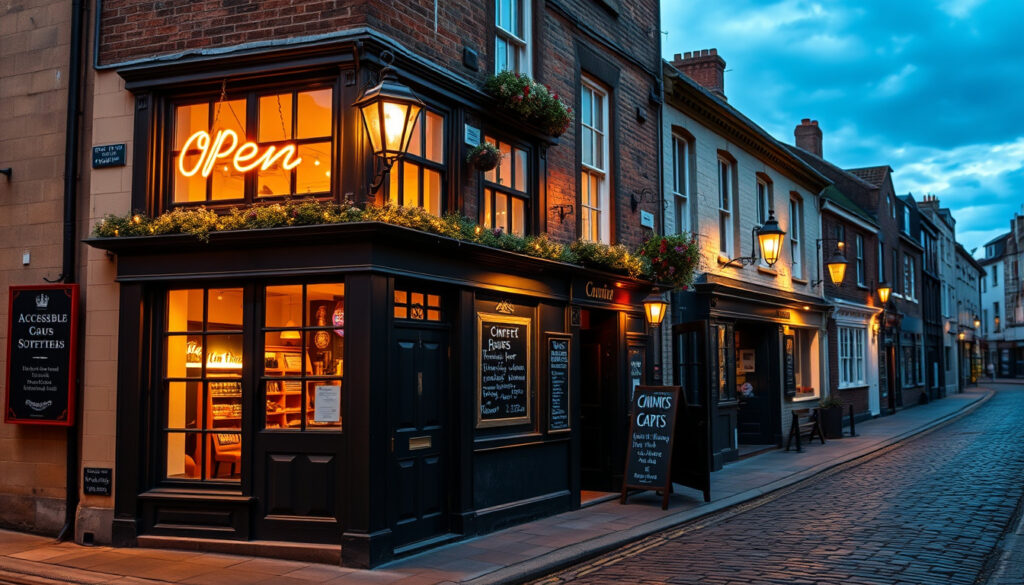
Pubs Open Near Me – UK Hours, Maps and Licensing Guide
Finding pubs open near you has become significantly easier with the proliferation of real-time digital tools, though understanding how licensing laws shape those hours remains essential for anyone planning an evening out. Whether you’re searching for a last-minute drink, planning a Sunday gathering, or looking for a late-night venue, knowing what influences pub opening times helps set realistic expectations and avoid disappointment.
UK pub opening hours operate within a flexible framework rather than a fixed national schedule, meaning that actual availability can vary considerably depending on location, local licensing decisions, and the specific venue. The gap between what appears on a search result and what you might find on arrival often comes down to understanding these underlying factors.
This guide examines how pub opening hours work across the United Kingdom, what tools provide the most accurate real-time information, and where regional and licensing variations create differences worth knowing about before you head out.
How to Find Pubs Open Near Me Right Now
Several tools have become standard for anyone seeking immediate information about nearby pub availability. Each offers different advantages depending on what you’re looking for.
Average Opening Time
Peak Evening Hours
Standard Sunday Window
Real-Time Verification
Essential Tools for Finding Open Pubs
Google Maps has emerged as the most widely used starting point for most searches, offering real-time status, directions, and user reviews that often mention factors like dog-friendliness or food availability. The platform’s “open now” filter has become particularly useful for spontaneous searches, though the accuracy depends on venue owners keeping their business listings current.
WhatPub, operated by the Campaign for Real Ale (CAMRA), represents a specialised alternative that prioritises accuracy and depth over breadth. The platform covers over 10,000 pubs and includes filters for opening hours, real ale availability, food service, and dog-friendly status. Unlike general search platforms, WhatPub relies on volunteer contributions from local CAMRA branches, which means information about smaller independent venues often proves more reliable than on broader aggregators.
The CAMRA Pub Guide and Pubfinder applications extend this specialist coverage, with the Good Beer Guide app providing additional curation for those prioritising beer quality alongside availability. These tools tend to serve serious pub enthusiasts rather than casual searchers, but their attention to verification makes them valuable when accuracy matters most.
- Google Maps provides the broadest real-time coverage with the familiar interface most users already have
- WhatPub offers specialist data on real ale pubs with volunteer-verified opening hours
- Local council licensing registers provide official confirmation of permitted hours for specific venues
- Pub chain websites (such as those operated by JD Wetherspoon) offer real-time information for their own properties
- OpenTable and similar reservation platforms help identify food-serving pubs with available bookings
- Reviews on any platform frequently mention factors that formal listings omit, such as atmosphere or particular events
- Calling ahead remains the most reliable method for verifying current status when planning matters
| Day | Typical Opening | Typical Closing | Notes |
|---|---|---|---|
| Monday | 11:00 AM | 11:00 PM | Standard weekday hours |
| Tuesday | 11:00 AM | 11:00 PM | Standard weekday hours |
| Wednesday | 11:00 AM | 11:00 PM | Standard weekday hours |
| Thursday | 11:00 AM | 11:00 PM | Extended hours possible |
| Friday | 11:00 AM | Midnight+ | Busiest evening, later opening common |
| Saturday | 11:00 AM | Midnight+ | Peak trading day |
| Sunday | 12:00 PM | 10:30 PM | All-day opening standard since 1995 |
| Bank Holidays | 12:00 PM | Extendable to 11:00 PM+ | Locally variable; extensions require licence |
What Are Typical Pub Opening Hours?
While the Licensing Act 2003 replaced older, more rigid scheduling systems, certain patterns have persisted as industry norms. Understanding these common windows helps frame what “typical” actually means in practice.
Weekday Trading Patterns
Most pubs in England and Wales operate between 11:00 AM and 11:00 PM on weekdays, a schedule that emerged from the older Licensing Act 1964 framework but continued under the more flexible 2003 legislation. This represents permitted hours rather than mandatory ones, meaning individual venues can apply for earlier opening or later closing times based on their location and customer base.
Rural pubs frequently close earlier than their urban counterparts, often around 10:00 PM, reflecting both lower demand and different licensing conditions negotiated with local authorities. Conversely, pubs in city centres, entertainment districts, or near major transport hubs commonly extend their hours well beyond the standard 11:00 PM closing time.
Justices of the Peace historically held discretion to modify permitted hours, sometimes authorising earlier 10:00 AM openings or restricting total trading to 9-9.5 hours with mandatory breaks. These variations persist in current licences and contribute to the complexity of generalising about “typical” hours.
The Sunday Framework
Sunday trading underwent significant liberalisation in 1995 when all-day Sunday opening became legal, ending the requirement for a 2:30 PM to 7:00 PM closure that had defined Sunday pub hours for decades. The change, reportedly welcomed by the industry, transformed Sunday from the most restricted trading day into one with comparable hours to weekdays.
Standard Sunday hours now typically run from noon to 10:30 PM, matching the weekday evening window but starting later. Many pubs maintain this schedule without variation, though licensed extensions remain available for venues seeking longer trading hours on specific Sundays.
Are Pubs Open Late or on Sundays Near Me?
Late-night and Sunday opening represent two areas where general rules break down most visibly into case-by-case determinations. Both fall squarely within local licensing authority jurisdiction rather than national mandate.
Late Night Trading and 24-Hour Pubs
The question of whether pubs can stay open past 11:00 PM depends entirely on individual licence conditions. Venues in designated entertainment zones or city centres commonly hold extended hours permits allowing trading until midnight, 2:00 AM, or even 4:00 AM for nightclubs. These permissions are not automatic and require applications demonstrating how extended hours align with the four licensing objectives: preventing crime and disorder, promoting public safety, preventing nuisance, and protecting children from harm.
Genuine 24-hour pubs remain rare outside specific environments such as airports, major railway stations, casinos, and certain hotels. The government guidance on alcohol licensing confirms that 24-hour operation is legally permitted nationwide if licensed, but that most areas do not see widespread uptake. Early Morning Restriction Orders (EMROs) have further complicated late-night trading in areas identified as having alcohol-related disorder problems, with some local authorities implementing bans on alcohol sales between midnight and 6:00 AM.
The “drinking-up time” convention, allowing customers one hour to finish their drinks after last orders, adds a practical buffer that means pubs closing at 11:00 PM often remain accessible until midnight in practice. This informal period has no fixed legal standing but represents accepted industry practice.
Bank Holiday Variations
Bank holidays follow a similar pattern to Sundays in terms of permitted hours, with noon to 10:30 PM representing the standard framework. However, the flexibility built into current licensing law means many venues obtain extensions for bank holiday trading, particularly during major events like Christmas, New Year’s Day, and Easter. Some pubs operate until 11:00 PM or later on bank holidays if their licence permits.
Bank holiday hours can differ significantly from standard days, with some venues taking the opportunity to close entirely while others extend their normal trading. Checking individual pub listings or calling ahead becomes more important on these days than on regular weekends.
Special Pubs Open Near Me (Food, Dogs, 24-Hour)
Beyond basic availability, many searches reflect specific requirements: diners seeking food, dog owners looking for venues that welcome pets, or those specifically seeking 24-hour establishments. These special categories each have their own dynamics worth understanding.
Pubs Serving Food
The gastropub trend has transformed food service across the UK pub sector, with many venues now operating as de facto restaurants with full alcohol licences. Food service typically runs from noon until 9:00 PM in most establishments, with later kitchen hours in city-centre venues. The government licensing guidance notes that food and alcohol licences are often bundled, reflecting the integrated nature of modern pub operations.
For those specifically seeking pubs serving food late, the combination of extended food hours and late-night licence hours narrows options considerably. Entertainment districts and areas with late-night economies tend to offer the best coverage, while suburban and rural pubs typically close their kitchens several hours before their bar areas.
Dog-Friendly Establishments
Dog-friendly pubs have become increasingly common, particularly in rural and countryside locations where walking routes bring patrons with pets. Survey data suggests approximately 30% of UK pubs maintain dog-friendly policies to some degree, though the extent of this welcome varies considerably. Some venues welcome dogs throughout, while others restrict them to certain areas or outdoor spaces only. For those seeking specific information, such as S-Market Kankaanpää opening hours, it’s often best to consult dedicated local guides. S-Market Kankaanpää aukioloajat
Digital platforms offer limited structured data on dog-friendliness, making user reviews often the most reliable source for this information. Searches for “dog friendly pub near me” on Google Maps frequently surface relevant results based on user-contributed photos and reviews mentioning dogs. The WhatPub database includes specific filters for dog-friendly venues, providing a more structured alternative for those prioritising pet welcome.
Locating 24-Hour Pubs
True 24-hour venues cluster in predictable locations: transport hubs, major hotels, casinos, and certain areas of 24-hour cities. London, as the UK’s most prominent 24-hour city, has the highest concentration of venues trading around the clock, though even there they represent a small minority of total establishments.
Early Morning Restriction Orders can prohibit alcohol sales between midnight and 6:00 AM in specific areas, meaning venues that appear to trade 24 hours may not actually serve alcohol throughout. Always verify what specific permissions a venue holds before making assumptions about availability.
A Timeline of UK Pub Licensing Changes
The current flexible system emerged from decades of incremental reform, with each legislative change reflecting shifting attitudes toward alcohol, public order, and commercial freedom.
- 1988: The Licensing Act 1988 introduced the familiar 11:00 AM to 11:00 PM framework for weekdays, replacing even more restrictive earlier provisions.
- 1995: All-day Sunday opening became legal, ending mandatory afternoon closures that had shaped Sunday pub culture for generations.
- 2003: The Licensing Act 2003 replaced fixed schedules with the current premises licence system, introducing flexibility and local control.
- 2005: Scotland enacted separate legislation with the Licensing (Scotland) Act 2005, creating distinct rules including overprovision controls.
- 2011: The Police Reform and Social Responsibility Act expanded late-night powers, introducing Early Morning Restriction Orders and Late Night Levies.
- 2020-present: The COVID-19 pandemic prompted temporary modifications and demonstrated the flexibility of the licensing framework, with outdoor drinking permissions and extended hours for trade recovery becoming more common.
What Is Certain and What Remains Unclear
| Established Information | Areas of Uncertainty |
|---|---|
| The Licensing Act 2003 governs English and Welsh pubs, replacing earlier fixed schedules with flexible premises licences. | Whether specific venues have obtained extensions beyond standard hours requires individual verification. |
| Typical weekday hours run 11:00 AM to 11:00 PM, with Sunday noon to 10:30 PM. | Post-COVID staffing shortages continue affecting actual opening hours in ways not reflected in official licences. |
| Scotland and Northern Ireland operate under separate licensing legislation with their own frameworks. | Weather, local events, and unexpected circumstances can alter real-time availability without notice. |
| EMROs can restrict late-night trading in specific problem areas designated by local authorities. | The exact proportion of dog-friendly pubs nationwide lacks authoritative current data. |
The Licensing Framework Behind UK Pub Hours
The Licensing Act 2003 fundamentally restructured how pubs operate in England and Wales by replacing uniform national hours with premises-specific licences. This shift aimed to give local communities more control over alcohol availability while enabling venues to tailor their trading hours to actual demand.
Under this system, pubs must demonstrate during licence applications that their proposed hours will not undermine four core objectives: preventing crime and disorder, ensuring public safety, preventing nuisance, and protecting children from harm. Local licensing authorities, typically operating through council committees, weigh these considerations against community interests when determining what hours to permit.
Regional variation emerges naturally from this localised approach. London and other metropolitan areas with active nightlife economies see higher concentrations of extended-hours licences, while more rural authorities often maintain more restrictive permissions. Scotland’s separate Licensing (Scotland) Act 2005 includes “overprovision” controls allowing authorities to refuse new licences in areas deemed to have sufficient alcohol outlets, a mechanism not present in English law.
Official Sources and Guidance
“Premises licences may be granted for any period, and may authorise the use of the premises for the sale by retail of alcohol at any time during the period to which the licence applies.”
The Campaign for Real Ale maintains the most comprehensive database of UK pubs through its WhatPub platform, with volunteer-verified information covering over 10,000 establishments. This specialist resource often provides more detailed and accurate opening hours data than general search platforms, particularly for independent venues that may not maintain their own digital presence.
“The flexibility provided by the 2003 Act has enabled many premises to vary their hours to meet changing demand, for example by extending hours on particular days or at certain times of year.”
— Institute of Alcohol Studies: Licensing in Practice report
Finding Pubs Open Near You
Successfully locating pubs open near you requires combining digital tools with an understanding of the factors that actually determine availability. Start with real-time platforms like Google Maps for immediate status, then supplement with specialist resources like WhatPub when depth and accuracy matter more than speed. Remember that actual hours often differ from permitted hours, and that local variations—whether from licensing restrictions, staffing challenges, or venue-specific policies—mean no single resource provides complete certainty. For those seeking specific experiences, whether estate agents near me or other local services, the same principle applies: verifying information through multiple sources remains the most reliable approach.
Frequently Asked Questions
How can I find pubs open near me right now?
Use Google Maps with the “open now” filter for immediate results, or WhatPub for specialist data on real ale pubs with verified hours. Calling venues directly remains the most reliable method when planning matters.
What time do most UK pubs open?
Standard opening time across England and Wales is typically 11:00 AM on weekdays and noon on Sundays, though earlier openings and significant variations exist based on individual licence conditions.
Are pubs open on bank holidays?
Bank holidays generally follow Sunday trading hours, usually noon to 10:30 PM, but many venues obtain extensions. Some choose to close entirely, making individual verification essential before visiting.
Are there truly 24-hour pubs in the UK?
Genuine 24-hour venues exist but are uncommon, primarily found at airports, major railway stations, casinos, and some hotels in 24-hour cities. EMROs may restrict alcohol sales during overnight hours even where venues remain technically open.
Which apps help find pubs open now?
Google Maps provides the broadest real-time coverage with “open now” filters. WhatPub offers CAMRA-verified data for real ale pubs, while OpenTable helps locate food-serving venues with available bookings.
Do dog-friendly pubs exist near me?
Approximately 30% of UK pubs maintain dog-friendly policies according to industry surveys, with higher concentrations in rural and countryside locations. WhatPub includes specific dog-friendly filters, and user reviews on Google Maps frequently mention pet welcome.
What pubs serve food late near me?
Gastropubs commonly serve food from noon until 9:00 PM, with later kitchen hours typically found in city-centre entertainment districts. OpenTable helps identify venues with food availability and allows advance reservation.
Are opening hours different in Scotland?
Scotland operates under the Licensing (Scotland) Act 2005, which includes stricter controls such as overprovision assessments. Core hours are similar to England and Wales, but local authorities have more latitude to restrict availability based on local conditions.
More related posts
 Untamed (Miniseries) Reviews: Is It Worth Watching
 Lucy Watson: Children, Husband, Net Worth, Made in Chelsea Career
 Canal Boats for Sale: Complete Buyer’s Guide for UK & Ireland
 Royal Challengers Bengaluru vs Mumbai Indians IPL 2026 Scorecard
 Roo Irvine: Real Name, Husband, Net Worth & TV Career
 Bianca Belair: Why She’s Absent from WWE Right Now
 Sheldon Cooper IQ 187, Autism & Jim Parsons: Full Facts
 Bhad Bhabie: Thyroid Cancer, OnlyFans, Baby Daddy, Net Worth