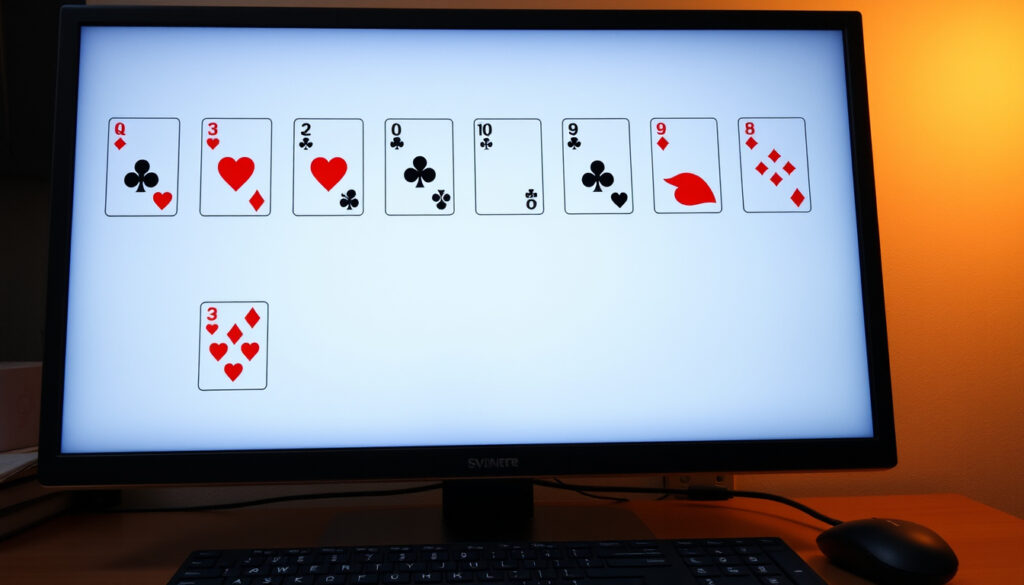
Spider Solitaire 2 Suits: Free Online Guide and Tips
Spider Solitaire 2 Suits uses two standard decks (104 cards total) limited to two suits, typically Hearts and Spades, making it harder than 1-suit but easier than 4-suit versions. The goal is to build eight King-to-Ace sequences in the same suit and move them to eight foundation piles to win.
Core Rules
- 2 suits from 2 decks (104 cards)
- 10 tableau columns
- Build descending same-suit runs
Play Options
- Free online no download
- Full screen modes
- Sites like Solitr and 247 Solitaire
Difficulty Level
- Intermediate difficulty
- Balances challenge and solvability
- Optimal for players advancing from 1-suit
Suits Used: 2 | Decks Required: 2 | Tableau Piles: 10 | Cards per Sequence: 13 (King to Ace) | Foundation Piles: 8
Key Facts
| Attribute | Value | Source |
|---|---|---|
| Total cards | 104 | BVS Solitaire |
| Suits used | 2 (Hearts, Spades) | Wikipedia |
| Initial dealt cards | 54 | SolitaireX |
| Stock cards | 50 | SolitaireX |
| Sequences needed | 8 | Solitaire.com |
| First recorded | 1917 | SolitaireX |
Free Spider Solitaire 2 suits
No-download options let you play immediately in any browser without installation or registration. Multiple dedicated solitaire sites offer instant access to this variant.
No download options
Browser-based versions require no software installation. You can start playing immediately, with progress often saved locally or via cloud sync depending on the platform. Sites like Solitr and Solitaired provide direct access to Spider Solitaire 2 Suits with full game features.
No registration required
Most online platforms allow anonymous play. Registration only becomes necessary if you want to track scores, access daily challenges, or sync progress across devices. Free access without an account typically includes unlimited games and standard features.
Before committing to a platform, test the undo feature availability—some versions restrict undo to registered users or limit daily uses.
Spider Solitaire 2 suits full screen
Full screen mode eliminates browser chrome and other distractions, creating an immersive card-playing environment. This feature works best on desktop browsers that support native full screen APIs.
Enable full screen mode
Most browser versions offer a full screen toggle button in the game interface. Alternatively, press F11 on Windows or Command+Control+F on macOS to activate browser full screen. Some platforms provide dedicated full screen modes with custom backgrounds and card designs.
Best sites for full screen play
247solitaire.com supports seamless full screen transitions with adaptive card sizing. The platform maintains game state during mode switches and offers both desktop and mobile-optimized layouts.
The name ‘Spider’ comes from the eight foundation piles you must fill to win – reminiscent of a spider’s eight legs.
Spider Solitaire 2 Suits tips
Strategic decisions in 2 Suits often determine whether you complete a winning sequence or dead-end with unplayable cards. The intermediate difficulty means experienced players can influence outcomes more than in 1-suit but randomness still plays a role.
Early game strategy
Prioritize building same-suit descending sequences from the first moves. Mixed-suit stacks limit mobility and require significant rework later. Reveal hidden cards quickly to increase available options—each uncovered face-down card potentially unlocks new moves.
Empty spaces are valuable. If you have a choice of moves, prioritize the one that gets you closer to creating an empty column.
Sequence building techniques
Build mixed-suit sequences on higher ranks early to uncover cards without blocking low cards. This approach differs from 4-suit strategy where suit conservation dominates decision-making. In 2 Suits, you can afford occasional mixed stacks because fewer suits reduce matching complexity.
Reserve Kings strategically—only Kings can fill empty columns, so hoarding them preserves flexibility for column management.
Avoid common mistakes
Avoid rushing moves; think carefully to avoid missing opportunities. Mixing too many suits early creates problems that compound as the game progresses. The undo feature helps test moves, but using it excessively may cost points in versions with scoring systems.
Spider Solitaire 2 suits 247
The 247 Solitaire platform offers a polished implementation of 2 Suits with daily challenges, statistics tracking, and multiple difficulty modes.
Features of 247 version
247 Solitaire includes unlimited undo, hint systems, and automatic sequence completion when a King-to-Ace same-suit run is finished. The platform tracks win rates, average moves per game, and streaks across sessions. Mobile apps extend the experience to iOS and Android devices.
How to access
Visit 247solitaire.com and select “Spider Solitaire” from the game menu. Choose the 2-suit variant from the difficulty selection screen. The platform requires no account for basic play but optional registration enables progress tracking.
Focus on building same-suit sequences: Even though you can build sequences of any suit, strongly prioritize grouping the same suit.
Spider Solitaire 2 suits Bliss
Solitaire Bliss provides an enhanced version with advanced analytics, custom themes, and community features that distinguish it from simpler browser implementations.
Unique features
The Bliss version includes detailed move analysis, win probability estimates, and performance metrics by game phase. Custom card decks and table backgrounds let players personalize the experience. Achievements and challenges add replay incentives beyond basic winning.
Foundation rules
Eight foundation piles receive completed King-to-Ace sequences automatically in online versions. Some implementations require manual movement to foundations, while others celebrate completion with animations before transferring the sequence. The Solitaire Bliss platform follows the automatic transfer model.
How to Play Spider Solitaire 2 Suits
The game uses two standard 52-card decks shuffled together, producing 104 cards total. Only Hearts and Spades remain in play, reducing suit matching complexity compared to 4-suit versions.
Tableau Setup
The tableau starts with 10 piles arranged across the play area. The first four piles receive six cards each (five face-down, one face-up), while the next six piles receive five cards each (four face-down, one face-up). This distribution deals 54 cards initially, leaving 50 cards in the stock pile.
- Shuffle two standard decks, then remove all Diamonds and Clubs to leave only Hearts and Spades.
- Deal the first four tableau piles with six cards each, flipping the top card face-up in each pile.
- Deal the next six tableau piles with five cards each, flipping the top card face-up in each pile.
- Place the remaining 50 cards face-down in the stock pile.
- Identify the eight foundation areas above the tableau where completed sequences will be moved.
The pattern of distribution creates initial face-up opportunities for immediate building while preserving enough face-down cards for future moves.
Never deal from the stock until all ten tableau piles contain at least one card. Empty columns can only receive Kings or King-led sequences.
Movement Rules
Build tableau piles in descending rank order regardless of suit. Any card can be placed on one rank higher—for example, a Queen accepts any King, while a 7 accepts any 8. However, only same-suit descending sequences can be moved as a unit within the tableau. If you’re looking for a way to play, you can Juega Bad Ice Cream gratis.
Single cards or same-suit runs are the only movable groups. Moving a mixed-suit sequence requires breaking it apart, which wastes moves and slows progress.
Dealing from Stock
When no empty tableau piles exist and you need more cards, deal one card to each of the ten tableau piles from the stock. This action distributes 10 cards simultaneously. You cannot deal if any column is empty—fill empty spaces with Kings or King-led sequences first.
Each card rank appears four times in 2 Suits (two decks × two suits). This frequency means finding matching suits requires patience and strategic planning.
Winning the Game
The game is won when all eight King-to-Ace same-suit sequences have been moved to the foundation piles and nothing remains on the tableau. Completed sequences are typically moved automatically to foundations in most digital versions.
Microsoft Windows scoring starts at 500 points, subtracts 1 per move, and adds 100 for each completed suit. Some versions award a 100-point bonus for using the undo feature, while others penalize it. Maximum scores of 1000 are possible when winning with all sequences completed through the tableau.
Spider Solitaire 2 Suits vs Other Variants
The 2-suit variant sits between 1-suit and 4-suit versions in complexity, offering balanced challenge for players advancing beyond beginner level.
| Variant | Suits | Difficulty | Strategy Complexity |
|---|---|---|---|
| Spider 1 Suit | 1 (Spades) | Beginner | Simplified |
| Spider 2 Suits | 2 (Hearts, Spades) | Intermediate | Moderate |
| Spider 4 Suits | 4 (all suits) | Advanced | Intricate |
The implication of this difficulty spectrum is that mastering 2 Suits provides a practical bridge to 4-suit play without the frustration of full suit-matching demands.
Proven Strategies to Boost Win Rates
Research across multiple solitaire platforms and player communities identifies specific tactical approaches that consistently improve winning odds in 2-suit Spider Solitaire.
Empty Column Priority
Empty spaces in the tableau are powerful assets. Each empty column enables strategic repositioning of cards and sequences. Always consider moves that create or preserve empty columns, even if they sacrifice immediate sequence completion.
Suit Management
Minimize mixing suits to avoid reconfiguration work later. Build same-suit runs whenever possible, even if it means leaving mixed stacks temporarily. Managing suits carefully reduces the total moves required to complete sequences.
Foundation Planning
Foundations are built indirectly through complete tableau sequences. Plan foundation accumulation by tracking which suits appear frequently in your tableau and which are scarce in the stock. This awareness guides decisions about preserving or breaking existing stacks.
Players who prioritize empty columns and suit-consistent sequences win 2-suit games more frequently than those who rush immediate sequence completion.
History of Spider Solitaire
The earliest known reference to Spider Solitaire appears in a 1917 book by Ely Culbertson, marking the game’s origins in early twentieth-century card game literature.
Microsoft Windows popularized the three-variant system (1-suit, 2-suit, 4-suit) during the 1990s, establishing these difficulty levels as the standard classification. The 2-suit variant specifically gained prominence as an intermediate option for players seeking more challenge than 1-suit offered without the full complexity of 4-suit.
Blank spaces are really powerful. If you have a choice of moves, pick the one that gets you closer to making an empty space.
Related reading: 7 Letter Word Finder Tools · Pokémon GO Redeem Codes
solitaire.com, 247spidersolitaire.com, spider-palace.com, thesolitaire.com, 247spidersolitaire.com, denexa.com, cadep.org.py
Spider Solitaire 2 Suits demands mastery of the classic 2-suit rules to build descending sequences from king to ace across ten columns effectively.
Frequently Asked Questions
How many decks are used in Spider Solitaire 2 suits?
Two standard 52-card decks are combined, yielding 104 cards total. All Diamonds and Clubs are removed, leaving only Hearts and Spades. Each card rank appears four times due to the dual-deck composition.
What is the objective of Spider Solitaire 2 suits?
Assemble eight complete King-to-Ace sequences in the same suit and move them to the eight foundation piles to win. All cards must leave the tableau for victory.
Can you move partial sequences in Spider Solitaire 2 suits?
Only same-suit descending sequences can be moved as a unit. Mixed-suit sequences cannot be moved together—cards must be moved individually or same-suit groups only.
How do foundations work in Spider Solitaire 2 suits?
Foundations accumulate completed sequences automatically in most digital versions. Each foundation pile accepts exactly one suit, building from Ace to King. Winning requires all eight foundations filled with complete same-suit sequences.
What happens when a full suit sequence is completed?
When a King-to-Ace sequence in the same suit is completed, it typically moves automatically to a foundation pile. Some versions require manual movement. Once in the foundation, the sequence cannot be returned to play.
Is Spider Solitaire 2 suits solvable?
Like most solitaire variants, 2-suit Spider is not guaranteed solvable from all starting layouts. However, the reduced suit count increases solvability rates compared to 4-suit versions, making it more forgiving for strategic play.
How to restart a game of Spider Solitaire 2 suits?
Most platforms offer a “New Game” or “Restart” button. In browser versions, refreshing the page typically starts a fresh deal. Digital versions may allow undo to the beginning or manual shuffle of the stock for replay.
What is the scoring system in Spider Solitaire 2 suits?
Microsoft Windows versions start scoring at 500 points, subtract 1 point per move, and award 100 points per completed suit. Maximum theoretical score reaches 1000 in some versions when all eight sequences are completed without using undo.
More related posts
 Tommy Robinson: Latest News, Biography, Jail, Personal Life
 Roofing Companies Near Me – Credentials, Costs and Warranties
 Lucy Beaumont: Biography, Split, Tour, and TV Shows
 Molly Caudery Spinal Surgery Ends Her Season
 Josh Duhamel Movies and TV Shows: Full Filmography
 Specific Heat Capacity of Water: 4184 J/kg·K and Why It Matters
 The Eminence in Shadow: Season 3, Streaming, Age Rating