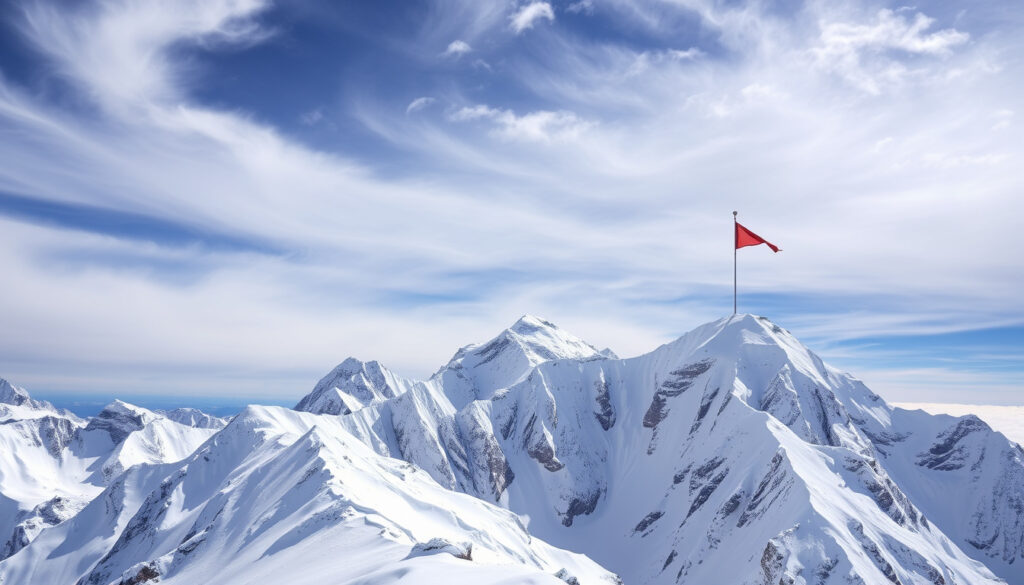
Mount Everest Peak: Height, Deaths & Key Climbing Facts
Everest has a way of pulling people in — even those who will never lace up a pair of mountaineering boots. It’s the world’s highest peak, a symbol of human ambition, and, increasingly, a place where record-breaking summits and deadly accidents sit side by side.
Height (2020 joint survey): 8,848.86 m (29,031.7 ft) ·
Location: Nepal/China border, Mahalangur Himal ·
First successful summit: 29 May 1953 – Edmund Hillary and Tenzing Norgay ·
Total recorded deaths (as of 2024): Over 330 ·
Estimated bodies on mountain: Over 200 ·
Annual climbers (Nepal side, recent years): 300–400
Quick snapshot
- 8,848.86 m / 29,031.7 ft (BBC News)
- Nepal–China border (Encyclopaedia Britannica)
- Part of Mahalangur Himal (Encyclopaedia Britannica)
- 29 May 1953 (Encyclopaedia Britannica)
- Edmund Hillary & Tenzing Norgay (Encyclopaedia Britannica)
- Over 6,000 summiteers since (Annapurna Trekking)
- 330+ recorded deaths (Annapurna Trekking)
- ~4–5 per year on average (Global Summit Guide)
- Death Zone >8,000 m is most lethal (Annapurna Trekking)
- May is primary window (Encyclopaedia Britannica)
- Pre‑monsoon calm (Encyclopaedia Britannica)
- Window lasts 2–3 weeks (Encyclopaedia Britannica)
Six key facts about Everest, from its official height to the oldest body still on the mountain, give a quick baseline for anyone exploring the peak.
| Fact | Value |
|---|---|
| Height | 8,848.86 m (29,031.7 ft) – BBC News |
| First ascent | 29 May 1953 – Hillary & Norgay – Encyclopaedia Britannica |
| Total recorded deaths | Over 330 (as of 2024) – Annapurna Trekking |
| Oldest body on mountain | George Mallory (discovered 1999, died 1924) – Annapurna Trekking |
| Most dangerous section | Khumbu Icefall – Annapurna Trekking |
| Biggest cause of death | Avalanches and falls in the Death Zone – Annapurna Trekking |
Is Mount Everest the highest peak in the world?
Yes — by the standard of elevation above sea level, Everest is the tallest mountain on Earth. Its official height, jointly announced by Nepal and China on 8 December 2020, is 8,848.86 metres (29,031.69 feet) (BBC News). The 2020 revision added 0.86 metres to the previous accepted figure, settling a long-running dispute between the two countries (NPR).
How does Mount Everest compare to other high peaks?
- Everest holds the record for highest altitude above sea level. But from base to summit, Mauna Kea in Hawaii is taller — over 10,200 metres from its base on the ocean floor (Encyclopaedia Britannica).
- Everest is part of the Mahalangur Himal sub‑range of the Himalayas, straddling the border between Nepal and the Tibet Autonomous Region of China (Encyclopaedia Britannica).
- China’s pre‑2020 measurement was 8,844.43 metres, about four metres lower than Nepal’s earlier figure of 8,848 metres (BBC News).
The 2020 joint survey resolved a diplomatic discrepancy that had existed for decades. For climbers and mapmakers alike, a single, universally accepted height means clearer route planning and consistent reference points.
The implication: Everest is the highest by the most common metric (sea level), but not the tallest from base to top. That distinction belongs to Mauna Kea.
How many climbers have died in Everest?
As of the end of the 2025 climbing season, the recorded death toll is reported to be 339, according to the Himalayan Database as cited by multiple sources (Annapurna Trekking; Global Summit Guide). That averages to about 4–5 deaths per year over the past century. The split is roughly 229 deaths on the Nepal side and 110 on the Tibet side (Annapurna Trekking).
Deadliest years on Everest
- 1996: 15 deaths in a single season, including the disaster chronicled in Jon Krakauer’s Into Thin Air (Annapurna Trekking).
- 2014: An avalanche on the Khumbu Icefall killed 16 Sherpas (Annapurna Trekking).
- 2015: The Gorkha earthquake triggered an avalanche that killed 22 people at Base Camp (Annapurna Trekking).
- 2019: A record number of permits were issued, leading to 11 deaths (Annapurna Trekking).
The pattern: Single‑event tragedies (avalanche, earthquake) cause spikes, but the underlying risk remains consistent for those who venture into the Death Zone.
What is the deadliest part of Everest?
Two sections account for the majority of fatalities: the Khumbu Icefall and the Death Zone above 8,000 metres.
The Khumbu Icefall
- Located just above Everest Base Camp on the Nepal side, this constantly shifting glacier is considered the most dangerous stretch of the South Col route (Annapurna Trekking).
- Seracs, crevasses, and ice avalanches make it a lottery — even experienced climbers are at risk (Annapurna Trekking).
The Death Zone
- Above 8,000 metres (26,247 feet), the human body begins to deteriorate rapidly. Oxygen levels are too low to sustain life for long (Annapurna Trekking).
- Common causes of death in the Death Zone: avalanches, falls, altitude sickness, exposure, and exhaustion (Annapurna Trekking).
Climbers who want the highest summit on Earth must accept that the final 800 metres offer no margin for error. Every minute spent above 8,000 metres is a gamble with cerebral and pulmonary oedema.
The catch: The Khumbu Icefall is a fixed hazard that can be partially mitigated with route fixing and cautious timing, but the Death Zone is a physiological limit that no amount of gear can fully overcome.
Has anyone reached Mount Everest peak?
Yes — and thousands have. The first successful summit was on 29 May 1953 by Edmund Hillary and Tenzing Norgay (Encyclopaedia Britannica). Since then, over 6,000 people have reached the top, according to the Himalayan Database (Annapurna Trekking).
Notable ascents
- 1996 disaster survivors: Several climbers from the 1996 season returned to summit later, including those who lost colleagues in the storm (Annapurna Trekking).
- 2026 record: On a single day in May 2026, 274 climbers scaled Everest via the Nepal side, a new daily record (BBC News).
Summit records
- Success rate in recent years has hovered around 60% for paying clients (Annapurna Trekking).
- Most summits occur in the narrow May window when winds are calmest (Encyclopaedia Britannica).
The mountain is more accessible than ever, but the sheer volume of climbers raises questions about safety, crowding, and the ethical impact of mass tourism on a fragile high‑altitude environment.
The trade-off: More summits mean more people in the Death Zone simultaneously, increasing the risk of bottlenecks and resource depletion.
Can you fly to the top of Mount Everest?
No scheduled airplane flights exist to the summit. The combination of extreme altitude, thin air, and lack of runways makes fixed‑wing operations impossible. Helicopters have landed on the summit, but such feats are extremely dangerous and rare.
Why planes avoid Everest
- Jet aircraft typically fly above 30,000 feet. Everest’s summit at 29,032 feet is close to cruising altitude, but the terrain offers no emergency landing options (Encyclopaedia Britannica).
- Severe turbulence and unpredictable wind patterns over the Himalayas make the airspace hazardous (Encyclopaedia Britannica).
Helicopter landings
- In 2005, a Eurocopter AS350 B3 landed on the summit for the first time (Encyclopaedia Britannica).
- Rescue helicopters can reach the South Col (around 7,900 m) but risk engine failure due to thin air (Encyclopaedia Britannica).
What this means: For anyone wanting to see the summit, the only way is on foot — or, in the case of a few elite pilots, in a specially modified helicopter.
Timeline: Key events on Everest
- 1922 – First recorded death: seven Sherpas killed in an avalanche (Annapurna Trekking).
- 1953 – First successful summit by Hillary and Norgay (Encyclopaedia Britannica).
- 1996 – Disaster season: 15 deaths in May (Annapurna Trekking).
- 2014 – Avalanche kills 16 Sherpas on Khumbu Icefall (Annapurna Trekking).
- 2015 – Earthquake triggers avalanche – 22 dead at Base Camp (Annapurna Trekking).
- 2019 – Record number of permits issued; 11 deaths (Annapurna Trekking).
- 2020 – Nepal and China publish new height: 8,848.86 m (BBC News).
- 2026 – Record 274 summits in one day via Nepal side (BBC News).
Confirmed facts vs. What’s unclear
Confirmed facts
- Height 8,848.86 m (BBC News)
- Location on Nepal–China border (Encyclopaedia Britannica)
- First summit in 1953 (Encyclopaedia Britannica)
- Khumbu Icefall is most dangerous section (Annapurna Trekking)
- Over 330 verified deaths (Annapurna Trekking)
What’s unclear
- Exact number of bodies remaining (estimated >200) (Annapurna Trekking)
- Precise death toll before 1922 – no comprehensive records exist
- Year‑by‑year unreported deaths due to remote ascents on the north side
“It is not the mountain we conquer but ourselves.”
Sir Edmund Hillary (Encyclopaedia Britannica)
Record 274 climbers scale Everest via Nepal in one day – a new milestone for the world’s highest peak.
BBC News, 21 May 2026 (BBC News)
The 1996 disaster changed public perception of guided commercial expeditions on Everest.
Jon Krakauer, Into Thin Air (Annapurna Trekking)
For anyone considering an Everest expedition — whether as a climber or an armchair observer — the key takeaway is that the mountain’s risks are real and well‑documented. The number of people attempting the summit each year continues to climb, and with it, the absolute number of tragedies. For the Nepali government and expedition operators, the challenge is to manage crowding without compromising safety. For climbers, the choice is clear: prepare thoroughly, respect the mountain, and never forget that the Death Zone waits for the unprepared.
en.wikipedia.org, dw.com, cnn.com, theguardian.com, nationalgeographic.com, hnn.us, aljazeera.com, thehindu.com, observervietnam.org
For a comprehensive overview of the world’s highest summit, check out this Mount Everest peak guide that covers height, deaths, and key climbing facts.
Frequently asked questions
What is the success rate for climbing Everest?
In recent years, about 60% of paying clients reach the summit, according to the Himalayan Database (Annapurna Trekking).
How much does it cost to climb Everest?
A guided expedition from the Nepal side typically costs between $35,000 and $100,000, depending on services and support (Encyclopaedia Britannica).
What is the best time to climb Everest?
The primary climbing window is in May, when the jet stream moves north and winds drop (Encyclopaedia Britannica).
How long does it take to climb Everest?
Most expeditions take about two months, including acclimatization rotations and weather waiting (Encyclopaedia Britannica).
Is it safe to climb Everest?
No. The death rate is roughly 1–2% of summiteers, with the highest risks in the Khumbu Icefall and Death Zone (Annapurna Trekking).
What permits are needed to climb Everest?
Climbers need a permit from the government of Nepal (costing about $11,000 per person) or from China’s Tibet side (Encyclopaedia Britannica).
What is the Khumbu Icefall?
It’s a treacherous glacier just above Base Camp on the Nepal side, known for shifting crevasses and ice avalanches (Annapurna Trekking).
How do climbers prepare for Everest?
Months of physical training, altitude-acclimatization climbs (e.g., on peaks like Aconcagua or Denali), and gear preparation are standard (Encyclopaedia Britannica).
Related reading
- Cape Verde Travel Guide: Flights, Cost, Safety & More – Planning a trip to a remote destination shares logistics lessons with Everest expeditions.
- Cruise Ship Guide: Slang, Costs, Food Tips & Best Lines – Understanding travel infrastructure can help climbers manage base camp logistics.
More related posts
 Jasmine Paolini: Personal Life Facts and Background
 Roo Irvine: Real Name, Husband, Net Worth & TV Career
 Peter Fonda: Family, Hopper Feud, Death & Net Worth
 Sandra Bullock: Love, Loss, and Life After Bryan Randall
 Tia Billinger: Life, Career, and Marriage of Bonnie Blue
 Jeff Nippard: Fiancée Death and Natty Debate
 Weather in Belfast 10 Days – Temperatures, Rain Chances and Outlook
 Angela Merkel: What Has Happened and Her Legacy | 2025 Update