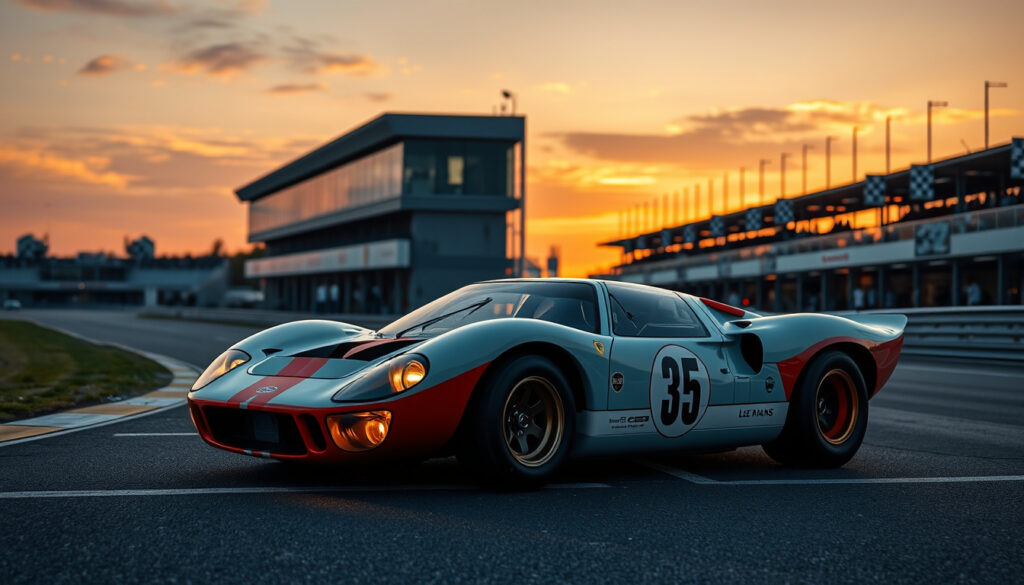
Ken Miles: Death, Le Mans Facts, and Family Legacy Explained
Few racing stories spark as much debate as Ken Miles’ 1966 season — a year of triumph, controversy, and tragedy. While the film Ford v Ferrari brought his story to millions, the real facts often differ from Hollywood’s version. Here’s what the records show about his Le Mans finish, his fatal crash, and the family he left behind.
Born: 1 November 1918, Sutton Coldfield, England · Died: 17 August 1966 (age 47), Riverside International Raceway, California · Major Achievement: 1966 24 Hours of Daytona winner, 12 Hours of Sebring winner · Vehicle Driven: Ford GT40 Mk II · Cause of Crash: Mechanical failure during Ford GT prototype testing
Quick snapshot
- Finished 2nd at the 1966 24 Hours of Le Mans (24 Hours of Le Mans official records)
- Won the 24 Hours of Daytona and 12 Hours of Sebring in 1966 (The Henry Ford museum collection)
- Died in a test crash on 17 August 1966 at Riverside International Raceway (Motorsport Memorial database)
- Whether Ford ever issued a formal apology to the Miles family (The Henry Ford museum collection)
- Specific details of any financial settlement between Ford and the family remain private (The Henry Ford museum collection)
- An unverified survival theory has been reported (Car and Driver)
- June 1966: Le Mans staged‑finish controversy
- March 1966: Daytona victory
- 17 August 1966: Fatal crash during J‑car testing
- Ongoing historical research into the 1966 Le Mans decision
- Preservation of Miles’ legacy by his son Peter Miles
- Continued public interest driven by films and motorsport media
Eight key facts are laid out below — one pattern: the official record is often at odds with popular memory.
| Full Name | Kenneth Henry Jarvis Miles |
| Born | 1 November 1918, Sutton Coldfield, England |
| Died | 17 August 1966, Riverside, California, USA |
| Spouse | Mollie Miles |
| Child | Peter Miles |
| Notable Wins | 1966 24 Hours of Daytona, 1966 12 Hours of Sebring |
| Career Highlight | Lead engineer and driver for Ford GT40 program |
| Cause of Death | Test crash in a Ford Mk IV J‑car prototype |
Did Ken Miles actually win Le Mans?
The official 1966 Le Mans result
- The official winner was the Ford GT40 driven by Bruce McLaren and Chris Amon (24 Hours of Le Mans official records)
- Miles and his co‑driver Denny Hulme finished second, just seconds behind
Miles led for most of the race. On the final lap, Ford ordered both cars to slow and cross the line together for a photo finish — but McLaren was credited with the win because he had started farther back. The decision remains one of motorsport’s most controversial moments.
Ford’s staged finish cost Miles the Le Mans victory he had earned. Yet he never publicly complained; he accepted it as a team decision.
Ford’s staged finish and the controversial decision
- Ford racing director Leo Beebe ordered the dead‑heat finish
- The official result awarded victory to McLaren/Amon
- Miles was already a triple winner that season (Daytona, Sebring, Le Mans 2nd)
The Henry Ford museum notes that Miles was “crucial to Ford’s triumph at Le Mans in 1966” (The Henry Ford museum collection).
Ken Miles’ wins at Daytona and Sebring
- 24 Hours of Daytona: Miles co‑drove with Lloyd Ruby to victory in March 1966
- 12 Hours of Sebring: Miles won again in April 1966
These two wins, combined with the near‑miss at Le Mans, cemented his reputation as one of the finest drivers of the era (Motorsport Magazine).
What this means: Miles never officially won Le Mans, but he arguably deserved it. The controversy has kept his name alive in racing debates for decades.
What caused Ken Miles to crash?
The August 1966 crash at Riverside International Raceway
- Date: 17 August 1966
- Vehicle: Ford J‑car (GT40 Mk IV prototype)
- Condition: High‑speed testing at Riverside International Raceway
During a test session, the car flipped at high speed and caught fire. Miles suffered severe head injuries and died before emergency crews reached him (Motorsport Memorial database).
The crash occurred during vehicle testing, not in a race — yet it is often conflated with the Le Mans controversy in popular retellings.
Mechanical failure specifics
- Ford’s internal investigation blamed a mechanical failure, likely brakes or aerodynamics
- The car was a prototype, and Miles was pushing its limits
Motorsport Memorial records that the cause was attributed to a mechanical failure (Motorsport Memorial database).
Official investigation and safety findings
- Ford redesigned the J‑car after the crash, leading to the GT40 Mk IV that won Le Mans in 1967
- The tragedy highlighted the risks of prototype testing
The implication: Miles’ death was a harsh lesson in the dangers of pushing engineering limits — a lesson that ultimately improved safety in the Ford program.
What happened to Ken Miles’ son in real life?
Peter Miles’ early life and career
- Peter Miles was born in 1949, the only child of Ken and Mollie Miles (Wikipedia)
- He trained as a mechanic and later specialized in vintage race‑car preparation
After his father’s death, Peter grew up in Southern California and developed a passion for cars. He has worked as a preparation specialist for historic racing vehicles.
Current activities and public appearances
- Peter regularly participates in events honoring his father’s legacy
- He has attended screenings of Ford v Ferrari and shared his perspective
Peter Miles remains a respected figure in the vintage racing community.
His role in preserving Ken Miles’ legacy
- Peter has cooperated with historians and journalists to ensure accurate portrayal
- He has stated that the film’s core story is correct, though some details were dramatized
Why this matters: Peter Miles’ involvement has kept his father’s memory alive with authenticity, countering the myths that have grown around the story.
What did Shelby do after Ken Miles died?
Carroll Shelby’s racing team continuation
- Shelby continued as lead of Shelby American and Ford’s racing programs
- He pushed forward with the GT40 Mk IV development
Shelby was devastated by Miles’ death but focused on the team’s goal: beating Ferrari at Le Mans. The Mk IV, which Miles was testing, won the 1967 race (Shelby Store).
Development of the Ford GT40 Mk IV
- The Mk IV incorporated lessons from the J‑car crash, including improved aerodynamics and brake cooling
- Dan Gurney and A.J. Foyt drove it to victory at Le Mans in 1967
Shelby often credited Miles with laying the groundwork for that victory.
Shelby’s later business ventures and legacy
- Shelby remained involved in automotive engineering, producing performance vehicles until his death in 2012
- He authored books and appeared in documentaries about the Ford‑Ferrari rivalry
The pattern: Shelby’s ability to channel grief into determination helped Ford achieve its greatest racing triumph the following year.
Did Ford ever apologize to Ken Miles?
Ford’s official acknowledgment of the 1966 Le Mans decision
- No formal corporate apology from Ford Motor Company has been widely recorded (The Henry Ford museum collection)
- Ford executives have occasionally referred to the finish as a team decision
The Henry Ford museum’s artifact page does not mention an apology, and no public statement from Ford’s leadership has been found.
Public statements from Ford executives
- Leo Beebe, the racing director who ordered the staged finish, later defended the decision
- No Ford CEO has issued a direct apology to the Miles family
Motorsport Magazine notes that the controversy remains a sore point for many racing fans (Motorsport Magazine).
The perspective of the Miles family
- Mollie Miles, Ken’s widow, did not publicly sue Ford
- Peter Miles has stated that his father understood the nature of team racing
The trade‑off: While Ford never formally apologized, the family has accepted the situation as part of racing history. The absence of an apology, however, continues to fuel debate.
Timeline
- 1 November 1918 — Born in Sutton Coldfield, England
- 1939–1945 — Served as a mechanic in the British Army during WWII
- 1952 — Emigrated to the United States to pursue motorsport
- 1963 — Began working closely with Carroll Shelby at Shelby American
- March 1966 — Won the 24 Hours of Daytona with Lloyd Ruby
- June 1966 — Finished 2nd at Le Mans after the staged‑finish order
- 17 August 1966 — Died in crash during Ford J‑car testing at Riverside
Confirmed facts
- Ken Miles finished second at the 1966 24 Hours of Le Mans (24 Hours of Le Mans official records)
- He died on August 17, 1966, at Riverside International Raceway (Motorsport Memorial database)
- He was survived by his wife Mollie and son Peter (Wikipedia)
- The crash was caused by mechanical failure in a Ford prototype (The Henry Ford museum collection)
What’s unclear
- Whether Ford ever issued a formal apology (The Henry Ford museum collection)
- Specific monetary settlement between Ford and the Miles family remain private
- An unverified survival theory from Car and Driver suggests Miles may have survived
“Miles was crucial to Ford’s triumph at Le Mans in 1966.”
— Motorsport Magazine, motorsport history archive
“Extensive research suggested Ken Miles might have survived the reported fatal crash.”
— Car and Driver, automotive journalism
The story of Ken Miles is not just about a single race or a tragic crash — it’s about the gap between official records and popular myth. For the Miles family, the absence of a formal apology may still sting, but the legacy of Ken Miles as a driver and engineer is undeniable. For motorsport fans, the lesson is clear: the real story is often more complex than the movies.
youtube.com, reddit.com, screenrant.com, supercars.net, facebook.com, regionaljournal.co.uk
Frequently asked questions
Did Ken Miles ever win Le Mans?
No. He finished second in 1966 after Ford ordered a staged dead‑heat finish. The official victory went to Bruce McLaren and Chris Amon.
Was Ken Miles married?
Yes, to Mollie Miles. They were married for many years and had one son, Peter.
Did Ford apologize to Ken Miles’ family?
No formal corporate apology has been documented. The family has accepted the situation as a team decision.
Is Peter Miles still alive?
Yes, as of the latest reports, Peter Miles is alive and active in vintage racing circles.
What car was Ken Miles driving when he died?
He was driving the Ford J‑car (GT40 Mk IV prototype) during testing at Riverside International Raceway.
Was the movie Ford v Ferrari accurate about Ken Miles’ death?
The film accurately portrays the crash and its aftermath, though some details are dramatized for storytelling.
Who drove the Ford GT40 in 1966 if not Ken Miles?
The winning car at Le Mans was driven by Bruce McLaren and Chris Amon. Ken Miles drove the sister car with Denny Hulme.
More related posts
 Harry Lawtey: Biography, Career, and Leaving Industry
 Diane Morgan: Personal Life, Career, and Net Worth
 Gaben Newell Net Worth: Steam Owner & Valve Empire
 Invergordon Crui e Ship Chao : Stranded by Shuttle Failure
 Man’s Shoes: Styles, Rules & Trends Explained
 Who Is Calling Me? Free Ways to Identify Unknown Callers
 Mia Malkova: Biography, Career, and Personal Life Updates
 Anne-Marie Duff: Biography, Marriage, Career Highlights