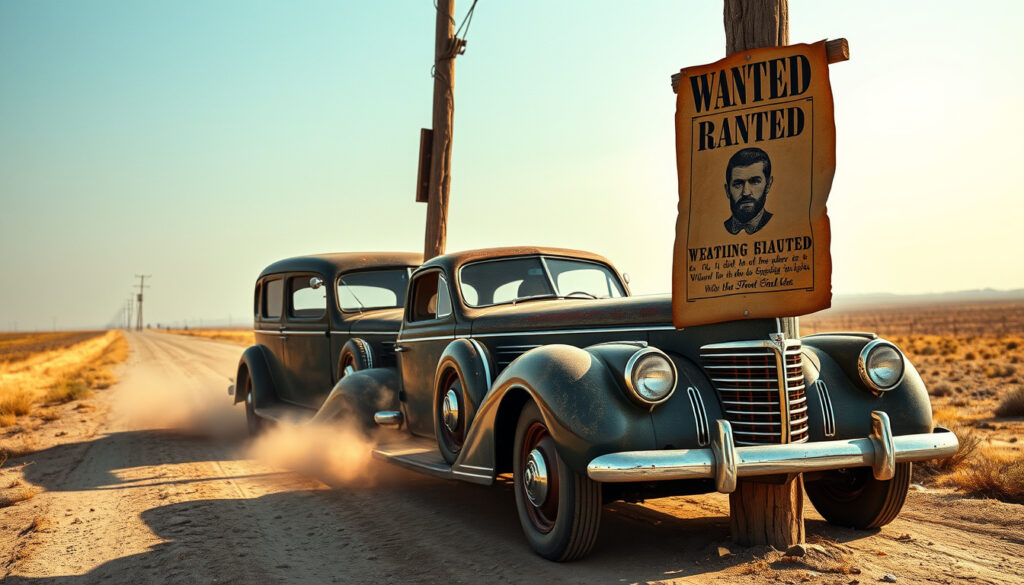
Bonnie and Clyde: True Story, Facts, Myths Debunked
Bonnie Parker and Clyde Barrow remain two of the most recognizable names in American crime history, their faces plastered on T‑shirts and movie posters. But the real story behind the 21‑month spree that ended in a hail of bullets is far messier than the romantic legend suggests.
Years active: 1932–1934 ·
Confirmed murders: 13 ·
Bank robberies: 0 (preferred small stores) ·
Date of death: May 23, 1934 ·
Age at death (Bonnie): 23 ·
Age at death (Clyde): 25
Quick snapshot
- Killed by a posse led by Texas Ranger Frank Hamer (Biography (historical biography))
- Committed at least 13 murders (TIME (news magazine))
- Bonnie was not pregnant at death (The Vintage News (history site))
- Henry Methvin betrayed the gang (Biography (historical biography))
- Whether the relationship was romantic or transactional (TIME (news magazine))
- Clyde’s sexuality – no definitive evidence (The Vintage News (history site))
- Exact number of bank robberies (likely zero) (TIME (news magazine))
- 21‑month spree from 1932 to May 1934 (TIME (news magazine))
- Killed in ambush near Gibsland, Louisiana (Biography (historical biography))
- Continued historical debate on relationship and motivations (The Vintage News (history site))
- New primary sources may refine the record (Biography (historical biography))
Six snapshot facts, one pattern: the popular image of bank‑robbing lovers is almost entirely wrong. Here is what the historical record actually shows.
| Label | Value |
|---|---|
| Full names | Bonnie Elizabeth Parker, Clyde Chestnut Barrow |
| Born | Bonnie: October 1, 1910; Clyde: March 24, 1909 |
| Died | May 23, 1934 |
| Cause of death | Gunshot wounds from police ambush |
| Number of gang members | Varies; core group of 4–6 |
| Total known victims | 13 (9 law enforcement, 4 civilians) |
Why were Bonnie and Clyde so famous?
The answer lies in media sensationalism and a Hollywood makeover, not in the scale of their crimes.
Media sensationalism in the 1930s
- Newspapers in the Depression era turned the Barrow Gang into front‑page drama, printing photos of Bonnie posing with a cigar and a pistol (TIME (news magazine)).
- The pair were among the first outlaws to be turned into celebrities by modern mass media (The Vintage News (history site)).
- Their crime spree lasted only 21 months, but the publicity made them seem larger than life (TIME (news magazine)).
The 1967 film and cultural myth
- Arthur Penn’s 1967 film Bonnie and Clyde cemented the romanticized outlaw archetype (Biography (historical biography)).
- Faye Dunaway and Warren Beatty portrayed them as glamorous rebels, far removed from the gritty reality (Biography (historical biography)).
What is the true story behind Bonnie and Clyde?
Separating myth from fact begins with their early lives and the formation of the Barrow Gang.
Early lives of Bonnie Parker and Clyde Barrow
- Bonnie married Roy Thornton at age 16 (Biography (historical biography)).
- Clyde was sentenced to 14 years at Eastham Prison Farm in 1930 for car theft, store robbery, and jailbreak (Biography (historical biography)).
- They met in January 1930 (The Vintage News (history site)).
The formation of the Barrow Gang
- Clyde’s older brother Buck and Buck’s wife Blanche were part of the group (The Vintage News (history site)).
- Other associates included Raymond Hamilton, Joe Palmer, W.D. Jones, Ralph Fults, and Henry Methvin (The Vintage News (history site)).
- Bonnie and Clyde were not always a duo; they operated with the broader gang (The Vintage News (history site)).
Key crimes and the 1934 shootout
- They robbed small‑town grocery stores and gas stations, not banks – a fact often overlooked (TIME (news magazine)).
- Clyde stole cars and weapons from military armories while local police had weaker equipment (TIME (news magazine)).
- On May 23, 1934, a posse of Texas and Louisiana lawmen ambushed them near Gibsland, Louisiana, firing 167 shots (TIME (news magazine); Biography (historical biography)).
Were Bonnie and Clyde in love?
The most romanticized question about the pair remains unresolved. Here is what the evidence shows.
Evidence from letters and family accounts
- Bonnie wrote poems about Clyde, including “The Story of Bonnie and Clyde,” expressing fatalism (The Vintage News (history site)).
- Some family members said they were devoted to each other (The Vintage News (history site)).
The debate among historians
- Historian Nate Hendley, cited by TIME, points out that “no one has confirmed whether they were dating or merely traveling companions” (TIME (news magazine)).
- Other accounts suggest a more transactional partnership focused on survival (The Vintage News (history site)).
The same absence of evidence that allows the love story to flourish also means we cannot prove it was a lie. For biographers, the relationship remains a black box.
What was Bonnie eating when she died?
The sandwich myth is a perfect example of a single dramatic detail outliving the truth.
The sandwich myth
- Popular legend claims Bonnie was eating a sandwich when the ambush occurred (The Vintage News (history site)).
- The myth originated from a journalist’s embellishment after the shooting (The Vintage News (history site)).
Autopsy and crime scene reports
- The actual autopsy report does not mention food in her mouth (The Vintage News (history site)).
- The coroner found 17 bullet holes in Clyde’s body and 26 in Bonnie’s (Biography (historical biography)).
The sandwich story is a perfect example of how a single dramatic detail – invented by a reporter – can outlive the truth for decades.
Who betrayed Bonnie and Clyde in real life?
Betrayal from inside the gang ended the spree, not superior police tactics.
Henry Methvin’s role
- Henry Methvin, a gang member, cooperated with law enforcement in exchange for immunity (Biography (historical biography)).
- His father helped set the ambush by pretending to have a broken‑down truck (Biography (historical biography)).
- The posse, led by Texas Ranger Frank Hamer, had been tracking the gang for months (Biography (historical biography)).
Was Bonnie pregnant when she was killed?
Another persistent myth is addressed by the medical record.
Autopsy findings
- The autopsy report confirmed Bonnie was not pregnant at the time of death (The Vintage News (history site)).
- She had no children (The Vintage News (history site)).
The rumor’s origin
- The pregnancy rumor started from a false newspaper report shortly after her death (The Vintage News (history site)).
The pregnancy myth added a layer of tragedy to the story, but the historical record shows it was pure fabrication.
Was Clyde asexual in real life?
Historians continue to debate this based on a lack of documented romantic partners.
Historical accounts of Clyde’s sexuality
- Some biographers suggest Clyde may have been asexual due to the absence of confirmed romantic partners besides Bonnie (The Vintage News (history site)).
- No definitive evidence exists to confirm or deny the claim (The Vintage News (history site)).
Modern interpretations
- The claim remains speculative, based on gaps in the historical record rather than direct testimony (The Vintage News (history site)).
The absence of evidence for Clyde’s sexuality mirrors the broader challenge of reconstructing the private lives of historical criminals.
Timeline of the crime spree
Key events from their meeting to their deaths.
January 1930
Bonnie Parker meets Clyde Barrow in Texas (The Vintage News (history site)).
1932
Clyde is paroled from prison; the crime spree begins (TIME (news magazine)).
April 1933
The Barrow Gang kills two police officers in Joplin, Missouri (TIME (news magazine)).
January 1934
The gang escapes from a shootout in Dexfield Park, Iowa (The Vintage News (history site)).
May 23, 1934
Bonnie and Clyde are killed in a police ambush near Gibsland, Louisiana (Biography (historical biography)).
What is confirmed – and what remains unclear
Confirmed facts
- Bonnie and Clyde were killed by a posse led by Texas Ranger Frank Hamer (Biography (historical biography)).
- They committed at least 13 murders (TIME (news magazine)).
- Bonnie was not pregnant at the time of death (The Vintage News (history site)).
- Henry Methvin betrayed the gang to law enforcement (Biography (historical biography)).
What’s unclear
- Whether Bonnie and Clyde were genuinely in love or in a transactional relationship (TIME (news magazine)).
- Whether Clyde was asexual; no definitive evidence exists (The Vintage News (history site)).
- The exact number of bank robberies (likely zero) (TIME (news magazine)).
In their own words
“Some day they’ll go down together; they’ll bury them side by side. To few it will be grief, to the law a relief, but it’s death for Bonnie and Clyde.”
– Bonnie Parker, from her poem “The Story of Bonnie and Clyde” (The Vintage News (history site))
“I had been trailing them for months. The ambush was set after Henry Methvin agreed to cooperate. We fired until their car stopped.”
– Frank Hamer, Texas Ranger (as quoted in Biography (historical biography))
“Don’t think I am hardhearted, but I have to live my own life. If I am killed, I want it to be quick.”
– Clyde Barrow, from a letter to his sister (The Vintage News (history site))
The pattern: all three voices – the poet, the pursuer, and the pursued – reveal a fatalism that the romanticized Hollywood version omits. For the Barrow Gang, the end was never in doubt.
en.wikipedia.org, youtube.com, facebook.com, cityreporter.co.uk
For a deeper dive into the couple’s crimes and legacy, check out this Bonnie and Clyde true story that separates fact from fiction.
Frequently asked questions
How many people did Bonnie and Clyde kill?
At least 13 murders are attributed to the Barrow Gang – 9 law enforcement officers and 4 civilians (TIME (news magazine)).
Did Bonnie and Clyde have a child?
No. Bonnie was not pregnant at the time of death and had no children (The Vintage News (history site)).
What car did Bonnie and Clyde drive?
They famously drove a Ford V‑8 sedan, which became a symbol of their mobility. The car was riddled with bullets during the ambush (Biography (historical biography)).
Where did Bonnie and Clyde die?
Near Gibsland, Louisiana, on a rural road (Biography (historical biography)).
Who killed Bonnie and Clyde?
A posse of Texas and Louisiana lawmen led by Texas Ranger Frank Hamer (Biography (historical biography)).
How old were Bonnie and Clyde when they died?
Bonnie was 23, Clyde was 25 (The Vintage News (history site)).
What happened to Bonnie and Clyde’s bodies?
Bonnie’s body was claimed by her mother and buried in Dallas, Texas; Clyde was buried in Western Heights Cemetery in Dallas (Biography (historical biography)).
Related reading
- Hell or High Water (2016): Is It Worth Watching – A modern heist film that echoes the outlaw tradition.
- Elephant Man: Joseph Merrick’s True Story & Disease Explained – Another historical figure whose true story differs from popular myth.
For those who still romanticize the Barrow gang, the reality is clear: they were not folk heroes but violent criminals whose spree cost 13 lives. The challenge for historians and readers alike is to hold the myth and the facts together without confusing one for the other.
More related posts
 Internal Doors Ireland: Prices, Types & Where to Buy
 World Championship of Legends – Winners, Teams and How to Watch
 Afternoon Tea at The Ritz: Prices, Dress Code & Menus
 Elton John Real Name: Reginald Kenneth Dwight Facts
 Specific Heat Capacity of Water: 4184 J/kg·K and Why It Matters
 Roofing Companies Near Me – Credentials, Costs and Warranties
 Lucknow Super Giants vs Gujarat Titans Match Scorecard IPL 2026
 S&P 500 Today: Index Price, News & Investment Guidance