Weald and Downland Museum – Explore Historic Rural Buildings
A Living History of the South East
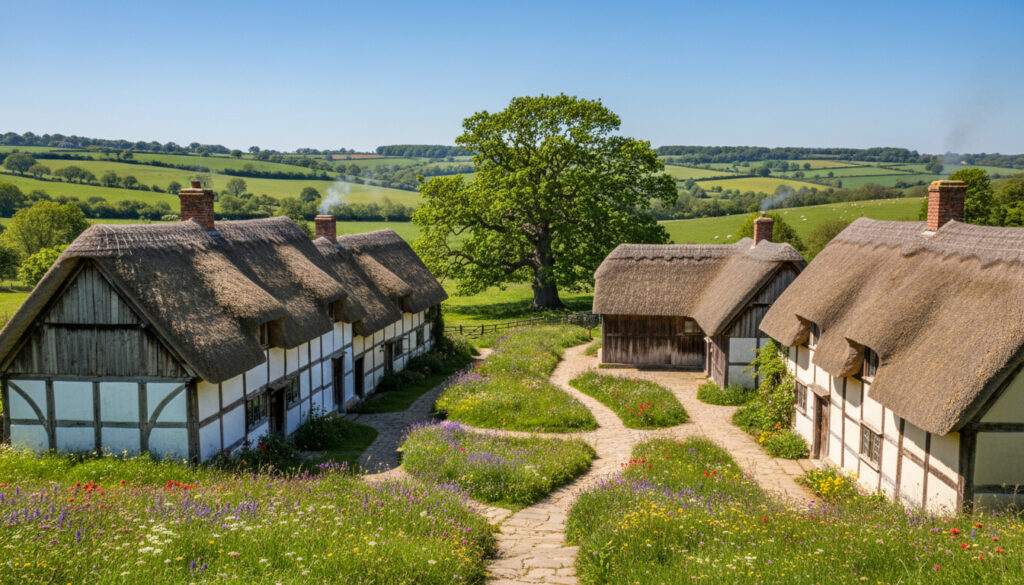
The Weald and Downland Living Museum stands as one of Britain’s most significant open-air heritage sites, preserving over fifty historic buildings across forty acres of West Sussex countryside. Unlike conventional museums that house artefacts behind glass, this institution offers an immersive journey through six centuries of rural life, where visitors walk through reconstructed homes, farms, and workplaces saved from demolition across the region.
What Defines the Experience
Authentic Structures
The collection spans medieval timber-framed halls to Victorian cottages, each painstakingly dismantled from original locations and rebuilt on the Singleton site. The Bayleaf farmhouse, a fifteenth-century Wealden hall house, demonstrates traditional construction techniques that have largely vanished from modern building practice.
Traditional Crafts
Working artisans demonstrate blacksmithing, pole-lathe turning, and brick-making using period-appropriate tools. These demonstrations transform abstract historical concepts into tangible skills visitors can observe and, in many cases, attempt themselves.
Rural Landscapes
The site maintains heritage livestock breeds and historic gardens, creating an ecological context for the buildings. Rare breed sheep and chickens roam designated areas, while the millpond and woodland trails replicate the agricultural setting that once surrounded these structures.
Why the Museum Matters
Heritage preservation faces constant pressure from development and decay. The museum serves not merely as a repository for old buildings but as an active research centre for vernacular architecture. Conservation specialists study the construction methods employed in these structures, gaining insights into how pre-industrial communities adapted to local materials and climate conditions.
Educational programmes extend beyond casual tourism. The museum hosts apprenticeships in traditional building crafts, addressing a critical skills shortage in the heritage sector. These initiatives ensure that knowledge of timber framing, thatching, and wattle-and-daub construction survives beyond the physical artefacts.
Visitor Information
| Season | Opening Hours | Admission | Key Features |
|---|---|---|---|
| Spring/Summer | 10:30 – 18:00 | £16.50 adult | Full building access, garden tours |
| Autumn/Winter | 10:30 – 16:00 | £13.50 adult | Limited building interiors, festive events |
| Annual Pass | Year-round | £45.00 | Unlimited visits, priority booking |
Notable Buildings
The Market Hall from Titchfield represents commercial architecture of the early seventeenth century, its timber frame and open ground floor illustrating the dual-purpose nature of market buildings. Visitors can examine the joinery techniques that have kept the structure stable for four centuries.
Recently reconstructed, the Whittaker’s Cottages from Ashtead demonstrate Victorian working-class housing. The modest dwellings contrast sharply with the grandeur of the medieval Bayleaf farmhouse, highlighting the economic stratification of rural communities.
The Gridshell Building, the museum’s twenty-first century addition, houses conservation workshops and the artefact store. This modern timber structure won the RIBA Sustainability Award for its innovative use of green oak and demonstrates contemporary applications of traditional woodland management.
From Concept to Institution
: Dr. J.R. Armstrong and a group of conservationists establish the museum, responding to the widespread demolition of historic farm buildings during post-war agricultural modernisation.
: The first buildings open to the public, including a medieval shop and Tudor kitchen, relocated from threatened sites across Sussex and Hampshire.
: The Downland Gridshell receives the Stirling Prize nomination, bringing international attention to the museum’s conservation work.
: The museum celebrates its fiftieth anniversary with the opening of a new entrance complex and visitor facilities.
: Expansion of the craft workshops allows for year-round courses in traditional building techniques, cementing the site’s role as a living educational institution rather than a static display.
Practical Considerations
The museum operates as a charity, relying heavily on volunteer stewards who provide context for each building. These interpreters vary their presentations seasonally, discussing harvesting in autumn and festive traditions during December. Visitors planning day trips should note that the rural location requires private transport or specific bus services from Chichester, with limited frequency on weekdays.
Accessibility presents challenges inherent to historic structures. While the Gridshell and visitor centre offer full wheelchair access, many medieval buildings feature steps and narrow doorways that predate modern standards. The museum provides detailed accessibility maps indicating which buildings accommodate mobility limitations.
Cultural Significance
The site’s role extends beyond preservation into popular culture. The BBC’s The Repair Shop films within the museum’s workshops, bringing millions of viewers into contact with traditional craftsmanship. This media presence has fundamentally altered visitor demographics, attracting younger audiences interested in sustainable making and repair culture.
Architectural historians value the collection for its typological range. The assembly of buildings from the Weald and Downland region—spanning the chalk hills of the South Downs to the clay lowlands of the Weald—creates a comparative laboratory for studying regional variations in construction. The Institute of Historic Building Conservation regularly holds conferences at the site, recognising it as a centre of excellence.
What Visitors Say
“Walking into the fifteenth-century farmhouse, you immediately understand how different sensory experience was in the past. The smell of wood smoke, the dim light through horn windows—it makes history visceral rather than intellectual.”
— Architectural historian, visiting lecturer
“My children initially balked at a ‘museum of old buildings,’ but three hours later they were still asking questions about how the blacksmith made nails. The hands-on approach transforms education into discovery.”
— Parent, annual pass holder
Final Perspective
The Weald and Downland Living Museum resists the notion that heritage must remain frozen in time. By maintaining working relationships with traditional craftspeople, offering practical training, and adapting historic spaces for contemporary use, the institution demonstrates that conservation succeeds when it serves present needs while honouring past techniques. For those seeking to understand the built environment of south-eastern England, the site offers irreplaceable insights into the vernacular architecture that shaped regional identity.
Common Questions
How long should I allow for a visit?
Most visitors require between three and four hours to view the major buildings and watch craft demonstrations. Those with specific interests in construction techniques or agricultural history often spend a full day exploring the site.
Can I bring my dog?
Dogs on leads are welcome in the outdoor areas and woodland walks but cannot enter buildings or the café. Water bowls are available at the visitor centre.
Is the museum suitable for young children?
Yes, though the educational value depends on the child’s interest in exploration. The site offers space to run, animals to observe, and hands-on activities during school holidays. Pushchair access is limited in certain historic areas.
Are the buildings original or replicas?
All structures are authentic historic buildings, relocated from original sites across South East England where they faced demolition. They have been carefully dismantled, transported, and reconstructed using traditional methods.
What is the best time of year to visit?
Spring and early summer offer the best combination of building access and garden displays. Autumn provides harvest demonstrations and fewer crowds, while winter visits focus on interior tours and festive programming.
More related posts
 Winona Ryder: Biography, Legal Case, and Comeback
 Ncuti Gatwa: Doctor Who, Biography, and Identity
 Linda Evangelista: CoolSculpting, Son, Net Worth & More
 Maxwell Caulfield: Biography, Wife, and Movies (2025 Update)
 Houses for Sale Linlithgow – Prices Listings and Buyer Guide
 Paul Mescal: Partner, Age, Height, Movies & More
 Harry Melling: Weight Loss, Net Worth, and Post-Potter Career
 When Is the Next General Election in Ireland? Deadline 2030