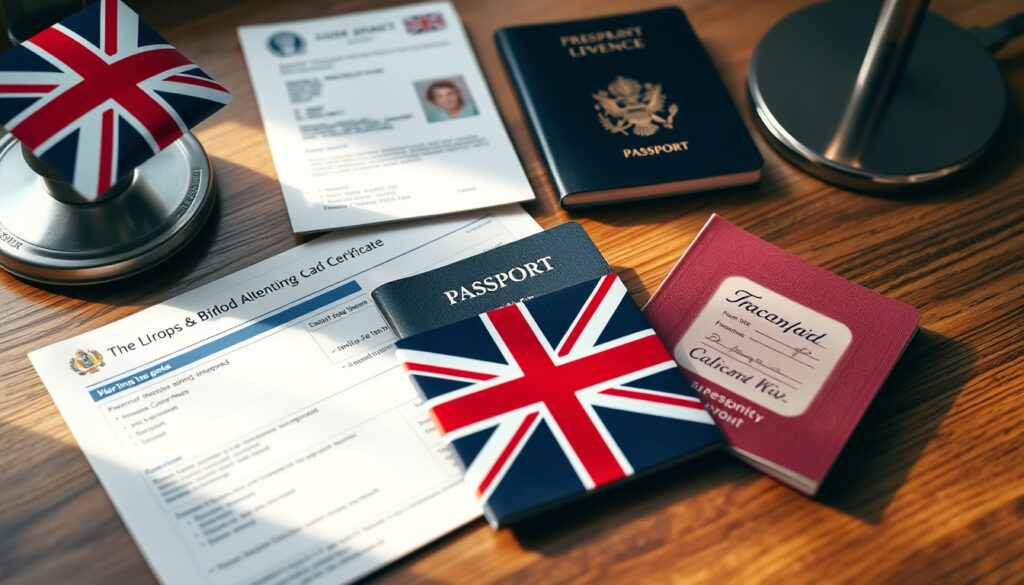
National Identity Card UK: Guide to Alternatives and Proof
Roughly 11 million people in the UK fall into an identity gap — no passport, no driving licence, no obvious way to prove who they are in everyday situations. The scrapped national ID scheme means citizens without standard documents must now rely on private alternatives for routine identity proof.
Official Status: No national ID card since 2011 · Popular Alternative: CitizenCard accepted UK-wide · PASS Card Cost: £15 via Post Office · Voter ID Use: Accepted for elections
Quick snapshot
- Discontinued in 2011, Identity Cards Act repealed (GOV.UK identity guidance)
- UK photo ID alternative, PASS hologram endorsed by Home Office (CitizenCard official site)
- £15 standard, accepted for voting, domestic flights, pubs, retailers (Post Office PASS card page)
- Driving licence, passport, biometric residence permits also accepted (GOV.UK acceptable ID list)
| Label | Value |
|---|---|
| Status | No active national scheme |
| Repeal Date | 2011 |
| Key Alternative | CitizenCard |
| PASS Price | £15 |
| Act Name | Identity Cards Act 2006 |
What is a national identity card in the UK?
The UK once came close to a nationwide identity card system — and then abandoned it entirely. Understanding what happened matters because it shapes what identity documents you actually need today.
History of the Identity Cards Act 2006
The Identity Cards Act 2006 passed under the Labour government established a framework for a national identity register linked to biometric data including facial biometrics and iris scans. According to GOV.UK guidance (official government publication), the scheme was intended to create a national identity database alongside physical ID cards for UK citizens.
Statewatch documented that the original proposals included online application systems similar to passport applications, with citizens required to register personal details on a centralised database. The scheme was controversial from the start, with civil liberties groups arguing the database created serious privacy concerns.
A 2010 Conservative election promise to scrap the scheme became reality in 2011, when the Identity Cards Act was repealed. Cards already issued became invalid for official purposes, though the government stated it would not be illegal to use an existing card as proof of identity informally.
Current status post-2011 repeal
Today, there is no government-issued national identity card in the UK. The repeal was complete: no national database exists, no citizen is required to hold a card, and no official body can demand you produce a national ID. Baker McKenzie notes that the UK does not issue a government-backed national ID card as matters stand.
This creates a practical gap. Without a mandatory national document, proving identity in everyday situations — buying alcohol, collecting a parcel, opening a bank account, voting — requires navigating a patchwork of acceptable alternatives. For the estimated 11 million UK residents without a passport or driving licence, that gap is real and consequential.
What is a CitizenCard?
CitizenCard is the most widely promoted non-government photo ID card in the UK, carrying a PASS hologram that signals official acceptance across multiple sectors.
Uses as UK photo ID
CitizenCard describes itself as a UK photo ID card for proving age and identity in situations where a passport or driving licence would typically be required. The card carries a PASS hologram endorsed by the Home Office, and the company states it is supported by the Police and the Security Industry Authority.
Yoti (a digital identity partner that launched a CitizenCard product in 2018) explains that PASS cards are for proving age, distinct from passports (for travel) or driving licences (for driving). This distinction matters: a CitizenCard cannot replace a passport for international travel, but it does cover the domestic identity-proof scenarios that other documents handle.
Shelter England confirms that CitizenCard is accepted by some banks as alternative ID for opening accounts — a significant use case that many people overlook when they assume only a passport or driving licence will do.
Accepted for age proof and voter ID
The Post Office PASS card page confirms that PASS cards are accepted UK-wide for a broad range of applications: proving age under 16, over 16, or over 18; voting in elections; domestic flights within the UK and Ireland; pubs and retailers for age-restricted sales; and cinemas.
For voters specifically, the Electoral Commission lists accepted forms of photo ID including PASS cards — which means a CitizenCard or Post Office PASS card works at polling stations across the UK. This is a concrete, elections-specific use case that makes the card genuinely useful for millions of voters who lack a passport or driving licence.
The UK’s unofficial ID system — built around a private company’s PASS cards endorsed by government — works better for everyday situations than the scrapped national scheme ever would have. Citizens get practical recognition, and the state avoids the cost and controversy of mandatory registration.
How do I get an identity card in the UK?
The application process for a PASS card is straightforward, but there are specific requirements worth understanding before you start. Baker McKenzie outlines the key steps and the Post Office PASS card page confirms the official process.
Apply for CitizenCard online
Applications can be completed entirely online at citizencard.com. The standard processing time is up to 21 days; urgent processing takes 1–2 working days for an additional fee. You submit a passport-quality photo, choose your card type (under 16, over 16, or over 18), and complete identity verification.
Requirements for first UK ID card
Identity verification requires one of two approaches. The digital route accepts a UK passport, EU/Irish passport, or Biometric Residence Permit (BRP) for online identity matching. If you don’t have those documents, you use the referee route: a trusted professional — teacher, doctor, solicitor, bank manager — must confirm your identity. The referee must be a professional in a recognized role, not a family member or someone related to you.
Baker McKenzie confirms no parent or guardian is required for a CitizenCard application — the referee system means a responsible adult professional can stand as guarantor regardless of the applicant’s age.
Post Office PASS card option
You can obtain a Post Office PASS card directly from a Post Office branch for £15 standard, using the same verification process as CitizenCard. The card is physically identical to a CitizenCard — the Post Office simply sells it under its own branding. You can also add it to the EasyID app for digital age verification online and in person.
How much does a CitizenCard cost?
Pricing varies by age, application type, and urgency. Understanding the full cost picture helps you decide whether to apply directly or go through the Post Office.
Pricing for standard cards
- First-time CitizenCard for under-16: free (standard), £17 urgent
- Standard CitizenCard for over-16: starts from £18 standard
- Post Office PASS card: £15 standard
- Replacement card: £14 standard, £29 urgent
CitizenCard’s official application page sets these prices, and the Yoti blog notes that a provisional driving licence costs £34 while a full passport costs £75.50 — making the £15 PASS card by far the cheapest recognised ID option for those who don’t already hold a licence or passport.
Fees comparison
The comparison is stark: for anyone who needs a recognised photo ID purely for domestic purposes (age verification, voter ID, bank account opening), spending £15–18 on a PASS card is dramatically cheaper than the £34 provisional licence or £75.50 passport. Yoti frames this as a deliberate accessibility argument, stating in their blog that the Post Office PASS card offers “affordable and accessible ways for people in the UK to prove their age and identity.”
For under-16s, a first-time CitizenCard is free — meaning young people can obtain a recognised photo ID at no cost if their parent or guardian uses the digital verification route, or if a referee is available.
What counts as a national ID card in the UK?
The honest answer is that no single document holds the status of a “national ID card” in the UK — but many documents are accepted as proof of identity in specific contexts. The key is matching the right document to the situation.
Accepted photo IDs for proof
GOV.UK’s list of acceptable ID documents for government schemes includes passports, driving licences, BRPs, and CitizenCards as valid options. The Post Office PASS card page extends this to cover voter ID, domestic flights, retail, and hospitality — a broader set of use cases than most people realise applies to PASS cards specifically.
Driving licence and passport status
A full UK driving licence and a UK passport are the most universally recognised identity documents. Neither is technically a “national ID card” — the passport is an international travel document, and the driving licence authorises vehicle operation — but both work perfectly well as photo ID for domestic purposes. A provisional driving licence is cheaper than a full passport but still more expensive than a PASS card, and it has the added requirement of passing the driving test before it becomes a full licence.
For those who hold neither, CitizenCard and the Post Office PASS card fill the gap. My ID Card is a competing PASS card provider, though its acceptance is less well documented than CitizenCard’s. The PASS hologram is what matters for official acceptance — not the specific issuer’s branding.
The implication is clear: for the estimated 11 million UK residents without a passport or driving licence, a £15 PASS card represents the most affordable route to widely accepted photo ID for everyday situations from voting to banking.
How to Apply for a PASS Card: Step by Step
Getting a recognised photo ID card in the UK takes days to weeks depending on urgency and your chosen route.
- Choose your card type: Under 16 (free first-time), over 16, or over 18 — each shows a different age indicator on the card.
- Prepare your photo: A standard passport-quality digital photo, uploaded during the online application.
- Complete identity verification: Either use digital ID (UK passport, EU/Irish passport, or BRP via Yoti) or arrange a referee — a professional such as a teacher, doctor, or solicitor who can confirm your identity in person.
- Apply online or in-branch: Submit at citizencard.com or purchase a Post Office PASS card at a branch for £15.
- Wait for delivery: Standard processing takes up to 21 days; urgent processing is 1–2 working days for an additional fee.
- Add to digital wallet (optional): Link the card to the EasyID app for digital age verification in online and physical transactions.
Timeline signal
Key milestones in the UK’s national ID landscape show how policy shifts created the current gap and the private-sector alternatives that filled it.
| Date | Event |
|---|---|
| 2006 | Identity Cards Act passed, establishing framework for national ID scheme |
| 2008 | National Identity Scheme proposals published, including online application systems |
| 2010 | Conservative election promise to repeal the Act |
| 2011 | Identity Cards Act repealed; government ID cards cancelled, cards invalid for official use |
| 2018 | Yoti launches digital CitizenCard partnership, expanding access to digital ID alongside physical cards |
Confirmed facts
- No national ID card exists in the UK post-2011 (GOV.UK identity guidance)
- CitizenCard is widely accepted across voter ID, retail, banking, and domestic travel (Post Office PASS card page)
- Post Office PASS card costs £15 and requires a passport-quality photo (Post Office PASS card page)
- Standard CitizenCard processing takes up to 21 days (CitizenCard application page)
- First-time under-16 CitizenCard is free (CitizenCard application page)
What’s unclear
- Whether the government will introduce any new voluntary or mandatory ID scheme in future
- Current acceptance rates by specific retailers or airline operators
- Whether CitizenCard will expand to serve as a formal immigration or residency document alongside BRPs
“PASS cards are for proving your age. Passports are for travelling, and driving licences are for driving.”
— Yoti (Digital identity specialist blog)
“The government cancelled the national identity card scheme in 2011. Cards already issued became invalid for official purposes.”
— GOV.UK official guidance
The practical reality for UK residents without a passport or driving licence is straightforward: CitizenCard and the Post Office PASS card are the recognised, affordable route to a widely accepted photo ID. The defunct national ID scheme is a closed chapter — what matters now is picking the right card for your needs, understanding the referee process if you lack a digital identity document, and knowing that voter ID, banking, retail, and domestic flights all accept the PASS card without hesitation.
Related reading: UK pub licensing and age verification · Best stocks and shares ISA providers UK
Business directors in the UK must now prepare for mandatory Companies House Companies House identity verification from late 2025, mirroring personal proof standards like passports.
Frequently asked questions
Do UK citizens have a national identity document?
No. The UK has no government-issued national ID card. The Identity Cards Act 2006 was repealed in 2011, cancelling the national scheme. Citizens rely on passports, driving licences, or private alternatives like CitizenCard and the Post Office PASS card for identity proof.
Is a driving licence a national identity card in the UK?
No, technically. A UK driving licence is a document authorising vehicle operation, not a national identity card. However, it is widely accepted as photo ID for domestic purposes including banking, voter ID, and age verification. A provisional driving licence costs £34, which is more than a PASS card but covers driving in addition to identity.
Is a passport a national identity card in the UK?
No — a UK passport is an international travel document, not a national identity card. It is accepted as photo ID for virtually any domestic purpose, from opening a bank account to voting, but its primary official function is for international travel. A full passport costs £75.50.
How to get a free ID card UK?
First-time CitizenCard applications for under-16s are free when using standard processing (1–2 working day urgent processing costs £17). Adults do not currently have a free option — the cheapest standard route is the Post Office PASS card at £15.
Do I have a national identity card in the UK?
Unless you held one from the short-lived national scheme before 2011, no — and even those older cards are no longer valid for official purposes. If you need a recognised photo ID, CitizenCard or the Post Office PASS card is the practical equivalent at the lowest cost.
How can people prove their identity?
Accepted proofs include a full UK passport, driving licence (full or provisional), Biometric Residence Permit, CitizenCard, or Post Office PASS card. GOV.UK lists these for government scheme applications, while the Electoral Commission specifically includes PASS cards for voter ID, and Shelter England notes that CitizenCard is accepted by some banks for account opening.
What is meant by national identity card?
In most countries, a national identity card is a government-issued document confirming identity and usually citizenship, often mandatory and linked to a national database. The UK has never fully implemented such a system — the 2006 Act was repealed before the scheme became widespread — leaving citizens to rely on a combination of passports, driving licences, and private PASS cards as practical identity documents.
More related posts
 Outlander: Blood of My Blood – Premiere, Episodes & Cast
 Bonnie Wright: Life After Harry Potter and Activism
 Davy Crockett: Frontiersman, Politician, and Alamo Legend
 Shoe Insoles: Types, Benefits, and When to Choose Custom Orthotics
 Lauren Hashian: Dwayne Johnson’s Wife & Her Music Career
 Best Water Bottles 2026: Health, Trends & Irish Brands
 Redmi Note 10 Pro – Specs Price Review 2025
 How Long Do Blood Test Results Take? Timeline & Guide